Get Full Government Meeting Transcripts, Videos, & Alerts Forever!
Get email alerts on the Criminal Justice Alternatives topic
No spam. Unsubscribe anytime.
Clermont County’s CAST program reports high completion and post-release treatment engagement in 2024
Summary
Greater Cincinnati Behavioral Health Services presented the Clermont County Alternative Sentencing Center (CAST) 2024 annual report to the Clermont County Board of Commissioners, reporting 188 admissions, strong completion rates and high linkage to continuing treatment and employment services.
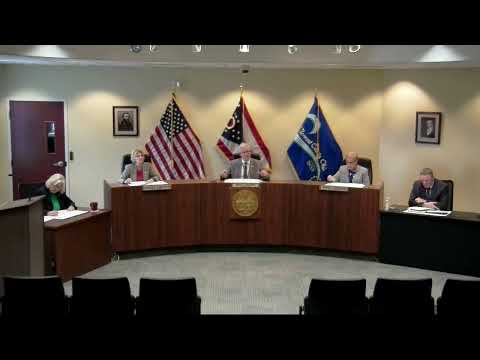
The Clermont County Board of Commissioners heard the 2024 annual report for the Clermont County Alternative Sentencing Center (CAST) on April 14 from Sarah Baldridge, associate director of behavioral health services at Greater Cincinnati Behavioral Health Services.
Baldridge said the program received 309 referrals in 2024 and accepted about 80% of them, with 188 admissions during the year. CAST provides intensive outpatient groups, individual counseling, case management, medication-assisted treatment (including buprenorphine and Vivitrol), psychiatric and medical services, nursing triage, peer recovery supports and employment services connected to the Aspire program.
Baldridge said the program aims to “keep our clients busy,” describing a seven-days-a-week schedule with clinical staff on site from 6:30 a.m. to 8:30 p.m. and multiple clinical and one-on-one contacts for each client. She said clients typically stay from five to 90 days, with OVI participants eligible for up to 120 days, and staff work to tailor discharge plans on housing, employment and continuing care.
Nut graf: CAST’s 2024 outcomes show strong short-term retention and linkage to follow-on care, measures county and criminal justice partners often use to evaluate alternatives to incarceration.
Among the metrics Baldridge provided: an average daily census of 17 for the male unit and nine for the female unit; an average daily program cost of $88.04; and successful completion rates of 93% for men and 89% for women in 2024. She said 84% of men and 83% of women who linked to treatment at the county-operated CRC remained in treatment at 90 days. For employment, 87% of previously unemployed clients referred to Aspire obtained employment after CAST participation. The report noted a 17% reincarceration rate within 12 months for those who completed the program (meaning 83% were not reincarcerated in that timeframe).
Baldridge described program enhancements from 2024, including expanded medical eligibility, a twice-weekly “medical huddle” to coordinate complex cases and expanded physical-health services provided by the program doctor so clients can be stabilized and bridged to community primary care. She also described coordination with municipal probation officers and specialized court dockets, noting the program sometimes uses court review hearings to address persistent behavioral issues rather than immediate termination.
Board members asked how CAST will interface with a planned county crisis center; Baldridge said specifics were not finalized but called the crisis center “a great resource” and said CAST expects to coordinate with it. She also emphasized the program’s reliance on multiple partners — municipal courts, probation, the sheriff’s office and jail administration — to maintain the continuum of care.
Ending: Commissioners thanked Baldridge and CAST supervisors for the report and for ongoing coordination with criminal justice and community partners as the county continues to evaluate alternatives to incarceration and post-release supports.