Get Full Government Meeting Transcripts, Videos, & Alerts Forever!
Get email alerts on the Agriculture Pest Control topic
No spam. Unsubscribe anytime.
Nicollet County ag inspector reports new prohibited weed, seeks state funding for position
Summary
At the April 8 Nicollet County Board meeting, the county agricultural inspector reported the county’s first confirmed sighting of the prohibited weed common tansy, outlined 2024 weed-control costs, and said lawmakers have introduced House File 39 to fund the ag inspector position, currently an unfunded state mandate.
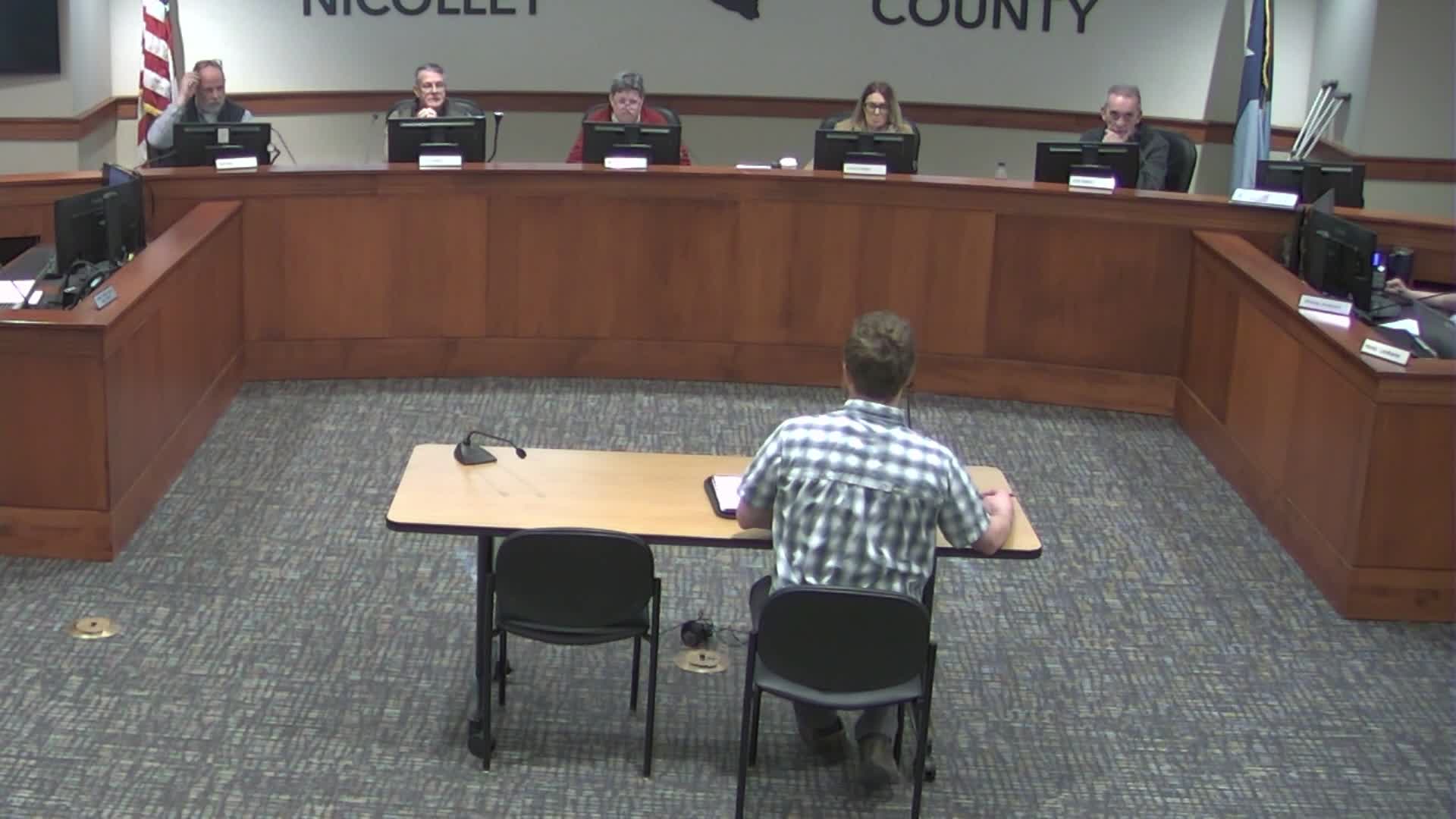
Nicollet County agricultural inspector Nate reported to the Board of Commissioners on April 8 that county staff identified the county’s first confirmed occurrence of the prohibited noxious weed common tansy along County Road 5 and arranged herbicide treatment and monitoring.
The discovery was detailed in the inspector’s 2024 annual report and the 2025 work plan provided to the board. Nate said the patch was ‘‘right on the edge of the right of way’’ and that staff staked the site and coordinated with the highway department for herbicide application, which produced an ‘‘effective kill’’ in 2024. He told commissioners staff will monitor the site this year and apply additional treatment if necessary.
The report also included county spending on noxious-weed control: the highway department’s 2024 expenses for mowing and spraying totaled just under $50,000. Nate described the ag inspector position as an ‘‘unfunded mandate’’ from the state and said county ag inspectors have lobbied the legislature for dedicated funding for several years.
Nate said Representative Paul Anderson has authored a funding bill this session, House File 39, and that the bill was scheduled for a committee hearing in the House agriculture and finance policy committee. ‘‘We’re optimistic that that’ll be approved and potentially get some funding for the position,’’ Nate said.
Board members asked technical questions about the plant and its appearance; when asked to spell the name, Nate said ‘‘common tansy, t-a-n-n-s-e-y,’’ and described it as a broadleaf with yellow buttonlike flower heads that blooms mainly in July and August.
The board moved to acknowledge receipt of the ag inspector’s report; the motion was seconded and the board approved the acknowledgement without further recorded comment.
Why it matters: common tansy is listed on the county’s prohibited noxious-weed list and, if left unchecked, can spread along rights-of-way and private property. The county’s current control work creates recurring operational costs; the proposed state funding in HF 39 would change how that position is financed if the bill is enacted.