Get Full Government Meeting Transcripts, Videos, & Alerts Forever!
Get email alerts on the Kaiser Plan Experience topic
No spam. Unsubscribe anytime.
Kaiser HMO claims rose in 2024; SFHSS told to expect higher premiums tied to medical and drug costs
Summary
Aon and Kaiser presented 2024 utilization and claims data for Kaiser HMO plans covering active employees and non‑Medicare retirees: overall paid claims rose about 16% per member per month year‑over‑year, driven by medical inpatient increases and prescription drug trend; SFHSS will review Kaiser renewal rates in June.
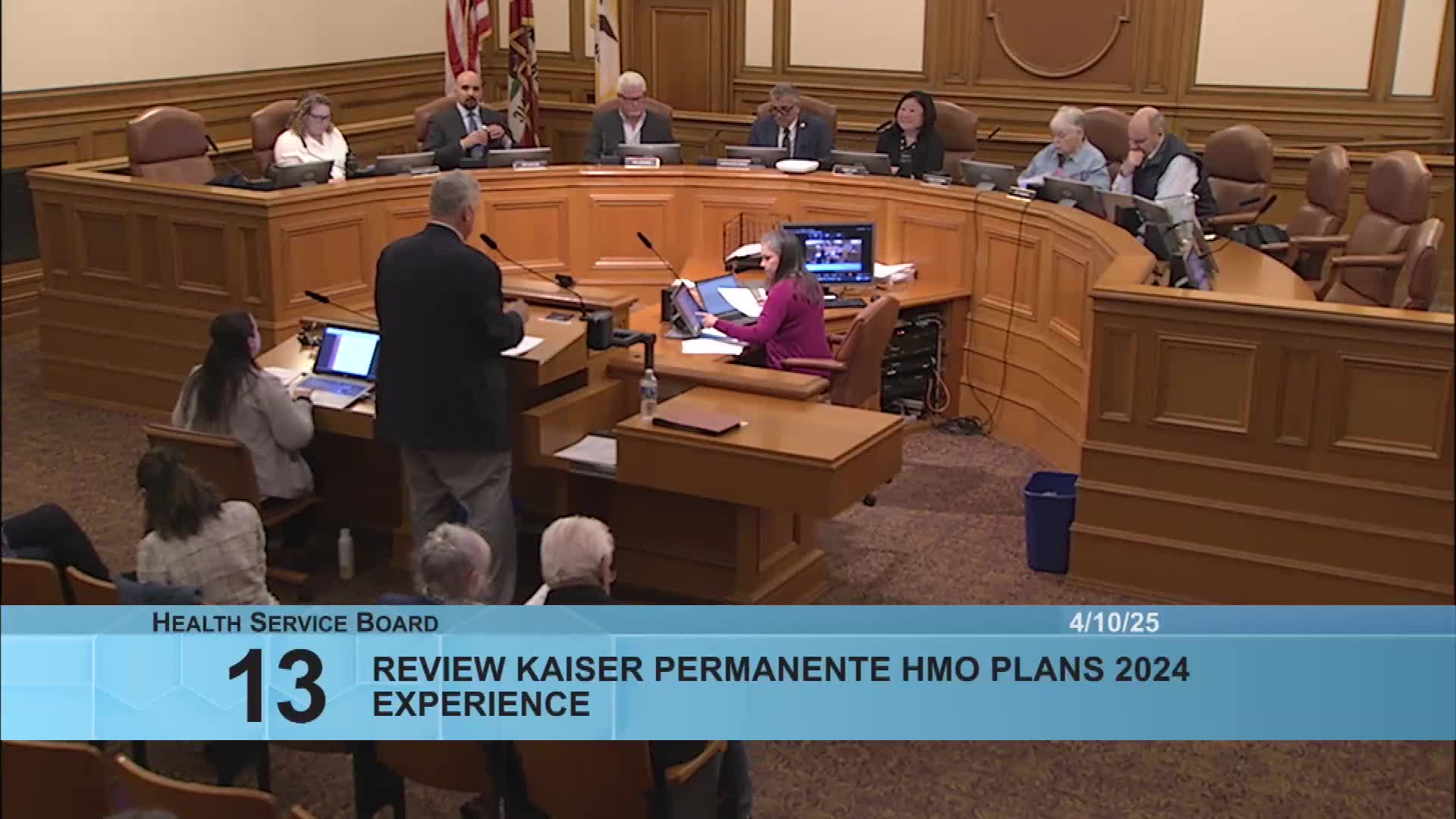
Kaiser Permanente and Aon presented the 2024 claims, utilization and quality metrics for Kaiser HMO plans that cover San Francisco active employees and non‑Medicare retirees. Mike Clark, Aon lead actuary, said total paid claims per member per month rose roughly 16% from 2023 to 2024—about a 15% increase in medical costs and a 21% increase in prescription drug spend.
Clark told the board that the increases were consistent with Kaiser’s overall book-of-business experience and with the expectations set when the board approved a 12.5% renewal the prior spring. He said drivers included higher inpatient utilization—particularly among non‑Medicare retirees, who saw a roughly 21% increase in inpatient admissions—and major drug categories, including oncology and anti‑infective medications. Clark also noted a relatively small number of very high‑cost claimants: 11 claimants with costs exceeding $1 million accounted for about 5% of total plan expense.
On utilization, the active employee population showed modest outpatient increases and relatively stable inpatient rates; the non‑Medicare retiree population experienced larger increases in inpatient admissions and outpatient hospital activity. On the pharmacy side, Clark identified endocrine drugs—largely GLP‑1 class medications—and oncology agents as notable contributors to trend.
The presentation included quality and preventive metrics. SFHSS members compared favorably to regional Kaiser averages on many health indicators and screening rates, Clark said, though the board was urged to watch age‑related risk indicators as the retiree cohort ages.
Kaiser’s underwritten premium rates that will reflect this experience are expected for the board’s June review. Clark said SFHSS and Aon will continue to analyze the underwriting and negotiate with Kaiser ahead of that approval.
Why it matters: Medical and pharmacy cost trends among a large insured population directly influence premium rates and the SFHSS budget. The mix of higher inpatient utilization and drug spending will be key factors in the coming renewal and stabilization discussions.
What’s next: SFHSS will bring Kaiser renewal proposals to the board in June; staff and Aon said they will scrutinize the underwriting and negotiate to limit premium impacts where possible.