Get Full Government Meeting Transcripts, Videos, & Alerts Forever!
Get email alerts on the Land Use And Infrastructure topic
No spam. Unsubscribe anytime.
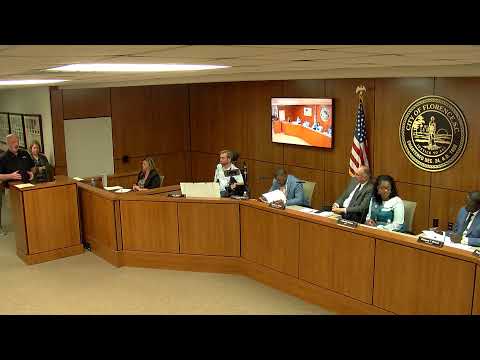
Duke Energy seeks UDO change to allow engineered setbacks for utility towers; council sends matter to executive session
Summary
Duke Energy asked the Florence City Council to amend the Unified Development Ordinance so setbacks for communications towers near residences can be based on an engineer‑certified fall zone rather than a strict foot‑for‑foot setback.
Representatives of Duke Energy asked the Florence City Council to amend the Unified Development Ordinance (UDO) so that setbacks for communications towers adjacent to residential lots are based on an engineered fall zone certified by a professional engineer rather than an explicit “foot‑for‑foot” setback.
Sarah Spruill, counsel for Duke Energy, introduced engineers Patrick Bernier and Caleb Jurgensen and explained the company’s request: modern tower designs are engineered to fail inward or fold, and not to topple as older towers might. Duke Energy asked the UDO language be updated so that, when an engineer certifies the fall zone for a specific tower design, that engineered distance would be the applicable setback to nearby residential lot lines.
Duke representatives said the request is narrow and intended to address existing substation sites with older towers that predate the current zoning standards; they said the replacements are designed to modern engineering standards and typically are treated as 50‑year utility assets. Duke cited comparable UDO provisions in surrounding jurisdictions, including Sumter, Darlington, Charleston and Georgetown counties and the cities of Surfside and Walterboro.
Council members pressed on policy implications. Some asked whether the request would open the door to other tower applicants by changing a general UDO provision; others sought reassurance the change would still require site‑by‑site review. Duke Energy and staff said the amendment would remain subject to the city’s special‑exception process and that each tower application would require design certification by an engineer and a special exception review.
Council agreed to discuss the matter further in executive session with the city attorney and staff to receive legal advice and to consider the requests in the context of existing code and special‑exception procedures. The council announced an executive session on UDO items and other matters; no final ordinance action or vote occurred at the public meeting.
Why it matters: the change would alter how the city measures setbacks for communications towers near residential parcels and could affect siting of future utility or communications infrastructure. Duke Energy said the amendment is largely to permit replacement of aging towers at existing substations while preserving engineered safety controls.
Clarifying details: Duke representatives told council the particular tower under discussion is approximately 300 feet tall; they described towers as engineered to fold or fail inward rather than topple. Staff confirmed that under existing UDO language the foot‑for‑foot distance is not waivable, so text amendment is needed to enable special‑exception review for engineered fall zones.
Next steps: council moved to executive session to receive legal advice and to discuss UDO amendments and related items; staff and Duke representatives will participate as appropriate. No public vote was taken on the text amendment at the meeting.