Get Full Government Meeting Transcripts, Videos, & Alerts Forever!
Get email alerts on the Criminal Justice Reentry topic
No spam. Unsubscribe anytime.
Reentry providers urge board not to cut AB109 contracts as public defender, jail and reentry offices flag workload shifts under Prop 36
Summary
Faith‑based reentry centers, community organizations and public defenders warned supervisors that proposed criminal‑justice budget reductions and new state rules under Prop 36 will raise jail and service needs; board members asked staff for a systemwide assessment before finalizing cuts.
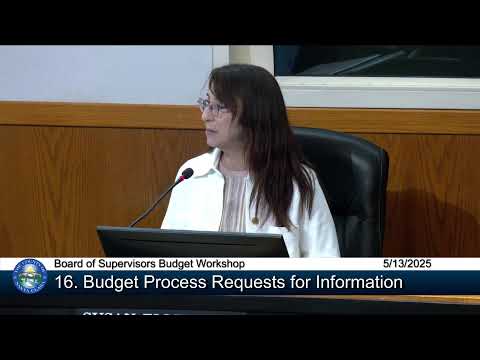
Reentry service providers, community advisory board members and public defenders urged the Santa Clara County Board of Supervisors May 13 not to cut community contracts funded by AB 109 realignment, saying reductions would harm people reentering from custody and could increase jail pressure.
Speakers representing faith‑based and community reentry programs said proposed reductions in contracted services would reduce capacity for housing, employment and navigation services that they said reduce recidivism. Javier Aguirre, of the Office of Diversion and Reentry Services, told the board that recommended budget adjustments would reduce contract funding and that negotiations with providers were ongoing.
Why it matters: The county faces a structural deficit in AB 109 funding—state sales‑tax‑based allocations have not kept pace with local costs, county staff said—and the recommended budget includes proposed cuts to older, underutilized contract appropriations. Supervisors and community speakers said cutting reentry contracts now would undermine prevention investments the county has prioritized.
Community appeals: Dozens of public commenters from Breakout Prison Outreach, Carry The Vision, Good Samaritan Project, Mission Possible Reentry Center and other groups said the faith‑based reentry centers and community‑based organizations are “lifelines” for people leaving custody. “These programs are not just services, they are lifelines,” said Yosania Velasquez, a reentry specialist with Breakout Prison Outreach and a Community Advisory Board member. Several speakers described personal recovery and employment outcomes tied to the centers.
Budget specifics: County administration identified about $1,450,000 in proposed reductions to contracted services in “criminal justice systemwide” costs; those reductions are spread across multiple agreements under negotiation. Javier Aguirre said the cuts being discussed include reductions to four faith‑based center contracts and a proposal to reduce or eliminate the county‑office‑of‑education high‑school diploma program at the reentry center. He said employment services were prioritized in a recent RFP and that the department is working to preserve some critical programs.
AB 109 structural context: County staff briefed the board on the broader AB 109 structural deficit. “Our AB 109 funding allocation … has not been growing at a pace commensurate with our cost increases,” a county executive‑office speaker said, adding the county has drawn down AB 109 fund balances and needs multiyear actions. The recommended budget proposes some vacancy reductions and object‑2 (contract) savings as part of that effort.
Prop 36 early impacts: At the same time, the public defender's office reported early operational impacts from a new statute (Prop 36), which the office said took effect Dec. 18, 2024. Public defender staff said they are seeing workloads increase: “We are on track for approximately 800 or more new felonies charged under Prop 36 this coming calendar year and about 300 misdemeanors,” an office representative said. The office also reported that a high share of those arraignments involve defendants arriving in custody; the office said roughly a third of those arriving remain in custody after arraignment, a factor that affects jail populations and system costs.
Board reactions and next steps: Supervisors repeatedly asked for a system‑wide assessment to understand who would be affected by contract reductions, where services overlap and how to avoid duplicative spending. Several asked staff to return with a detailed list of contracts proposed for reduction and the expected service impacts. County leaders agreed to revise recommendations and bring back proposals after more analysis; the board signaled a preference to avoid cuts that would undermine reentry and prevention efforts.
Public‑safety tradeoffs: Supervisors, county executives and reentry leaders emphasized that short‑term savings from cutting community contracts could produce larger long‑term public‑safety and fiscal costs if people lose access to housing, jobs and treatment that reduce returns to custody.
Ending note: The board asked administration to return with detailed contract‑level impacts and exploration of alternative offsets or funding sources before the budget is finalized, and public commenters pledged to continue advocacy to restore or preserve reentry contract funding.