Get Full Government Meeting Transcripts, Videos, & Alerts Forever!
Get email alerts on the Hemp Regulation Taxation topic
No spam. Unsubscribe anytime.
Committee advances hemp-products measure, shifts proposed tax collection to wholesale and adopts distribution amendment
Summary
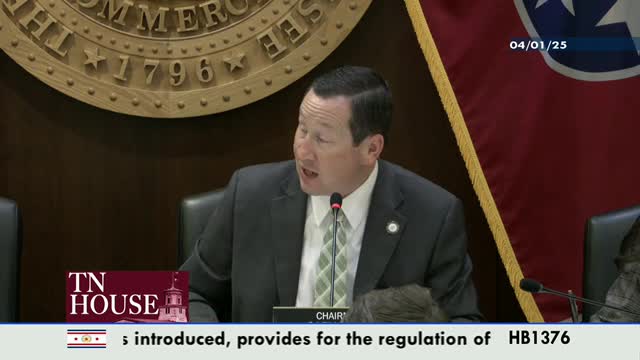
The House Finance, Ways and Means Committee on April 1 advanced House Bill 13-76 after adopting several amendments that move taxation of certain hemp-derived products to the wholesale level, set per-serving tax rates for specific product types, and direct revenue shares to the ABC, Department of Revenue and the general fund.
The House Finance, Ways and Means Committee advanced House Bill 13-76 on April 1 after adopting multiple amendments that change how hemp-derived products would be taxed and how revenue from that tax would be distributed.
The bill, carried in committee by Leader Lambert, was amended on the floor of the committee to shift a proposed retail tax to a wholesale collection point, to set per-serving and per-product wholesale rates for several categories of hemp-derived products, and to direct how the wholesale-tax revenue is split among enforcement and the general fund.
The changes matter because they rework the proposed mechanism for taxing hemp-derived products — from retail collection to wholesale — and establish specific per-unit tax formulas and a revenue distribution formula. Supporters said the wholesale approach simplifies administration and aligns collection with existing systems used for alcoholic beverages and tobacco; opponents warned the changes could favor large, vertically integrated firms and hurt small, independent retailers.
Chairman Williams introduced the principal tax amendment (drafting code 6799), explaining in committee that the amendment "sets for gummies, per, serving amount of 15 mg, a total per pack of 300... 1 cartridge or vape set at 500... and 1, based upon, a typical serving based upon current statute of 2¢ per serving for a total of 30¢ for a 15 milligram serving per beverage." The amendment also moved collection to the wholesale level and proposed that the wholesale tax be administered similarly to wine and spirits collections by the Department of Revenue.
Leader Lambert told the committee he supported the wholesale approach, saying, "I fully agree with the amendment... this would shift it over to the wholesale," and described the change as an improvement over the bill's initial retail collection proposal. Lambert also noted the offices had not been able to fully quantify fiscal effects in a single number because of pilot programs and limited historical data.
The committee laid one proposed amendment on the table after debate. An amendment to permit unattended vending machines for hemp products (drafting code 6729) was tabled after members raised concerns about age verification and public-safety enforcement when sales are not mediated by a clerk.
A later, untimely-filed amendment (drafting code 6952) that adjusts revenue distribution passed with committee approval. That amendment directs that wholesale collections be distributed 10% to the Alcoholic Beverage Commission (ABC) for its operations, 10% to the Department of Revenue for enforcement and administration, and the remaining 80% to the general fund. Another untimely-filed amendment (drafting code 6819) was filed and later withdrawn by its sponsor.
Representative Miller asked for clarity about the number of licensed stores, and Leader Lambert described Nashville and statewide licensing counts in general terms, noting a larger number of licensed retailers than manufacturers. Other members pressed about manufacturing, retail licensing, and the distinction between open (refillable) systems and closed/disposable products; witnesses and members emphasized that enforcement and labeling details would matter for implementation.
After the amendments were adopted and the bill was returned to the committee as amended, the committee voted to send House Bill 13-76 to calendar and rules. The clerk reported "Mr. Chairman, you have 27 ayes, 0 nos." The ayes prevailed and the bill was advanced.
The bill will next appear on the chamber calendar with the adopted amendments and the wholesale-tax mechanism in place; the committee did not set implementation dates in committee other than adopting the distribution amendment.
Ending: The committee approved multiple substantive amendments to House Bill 13-76 and advanced the measure to calendar and rules 27-0. The changes shift tax collection to the wholesale level, set per-serving and per-product wholesale rates in several categories, and direct an 80/10/10 split of collections to the general fund, ABC and Department of Revenue, respectively. Additional implementation questions and regulatory details were raised during debate and may be addressed in the next stages of the legislative process.