Get Full Government Meeting Transcripts, Videos, & Alerts Forever!
Get email alerts on the Voting Rights Restoration topic
No spam. Unsubscribe anytime.
Debate over restoring voting rights: advocates warn proposed court-heavy process would limit access
Summary
Lawmakers debated a bill to standardize restoration of voting rights after felony convictions; civil-rights advocates warned that shifting much of the process to court could make restoration inaccessible.
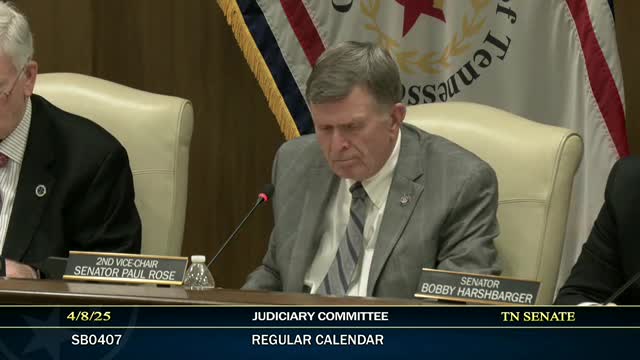
Senate Bill 4-07 would clarify the process by which Tennesseans who have completed sentences may have voting rights restored and would explicitly separate restoration of voting rights from restoration of other civil rights such as firearm possession.
Proponents, including the bill sponsor and the Secretary of State's office, said the measure creates a uniform court-based petition and an administrative order form to make restoration determinations consistent across counties. The bill also directs the Administrative Office of the Courts to prepare a standard petition and order form and adds notice requirements to the attorney general, district attorneys and U.S. attorneys.
Opponents — including free-rights advocates who help people through restoration, University of Tennessee legal-clinic staff and experienced criminal-defense attorneys — said the bill replaces a largely administrative certificate-of-restoration process that many eligible people used with a court petition system that will impose filing fees, require service on multiple actors, and in practice make the process cost-prohibitive and dependent on counsel. Joy Vadise, director of the UT Law legal clinic, told the committee the administrative route is often the only accessible path for indigent applicants. Free Hearts volunteer Dawn Harrington said it took nine years for her to get rights restored and urged a simpler, less court-centric approach.
Secretary of State staff and the Division of Elections defended the bill as a needed statutory fix after the Tennessee Supreme Court's Falls v. Goins decision fragmented practice across counties; staff noted the bill permits judges to waive hearings if the petition on its face meets statutory requirements. Director of Elections Mark Goins and Janet Kleinfelter (special counsel) answered detailed procedural questions about notice, timing and the role of the Administrative Office of the Courts to create petition forms.
Committee action: The committee voted to place the bill on the calendar after debate. Opponents asked for summer study or narrower edits; senators asked for further work with the Administrative Office of the Courts to ensure a workable process.
Why it matters: The bill deals with the practical access of tens of thousands of Tennesseans to a fundamental civil right. The dispute centered on whether uniform, predictable forms and notice rules would improve access or instead raise barriers for indigent petitioners who lack attorney representation.