Get Full Government Meeting Transcripts, Videos, & Alerts Forever!
Get email alerts on the Criminal Justice Data topic
No spam. Unsubscribe anytime.
Tennessee comptroller finds data gaps across Shelby County criminal justice system; urges standard metrics, unique case IDs
Summary
A Thursday presentation to the Shelby County Commission's Law Enforcement, Corrections and Courts Committee from the Tennessee Comptroller's Office described significant gaps in local criminal-justice data and urged Shelby officials to begin publishing a defined set of metrics so policymakers and the public can track case outcomes.
A Thursday presentation to the Shelby County Commission's Law Enforcement, Corrections and Courts Committee from the Tennessee Comptroller's Office described significant gaps in local criminal-justice data and urged Shelby officials to begin publishing a defined set of metrics so policymakers and the public can track case outcomes.
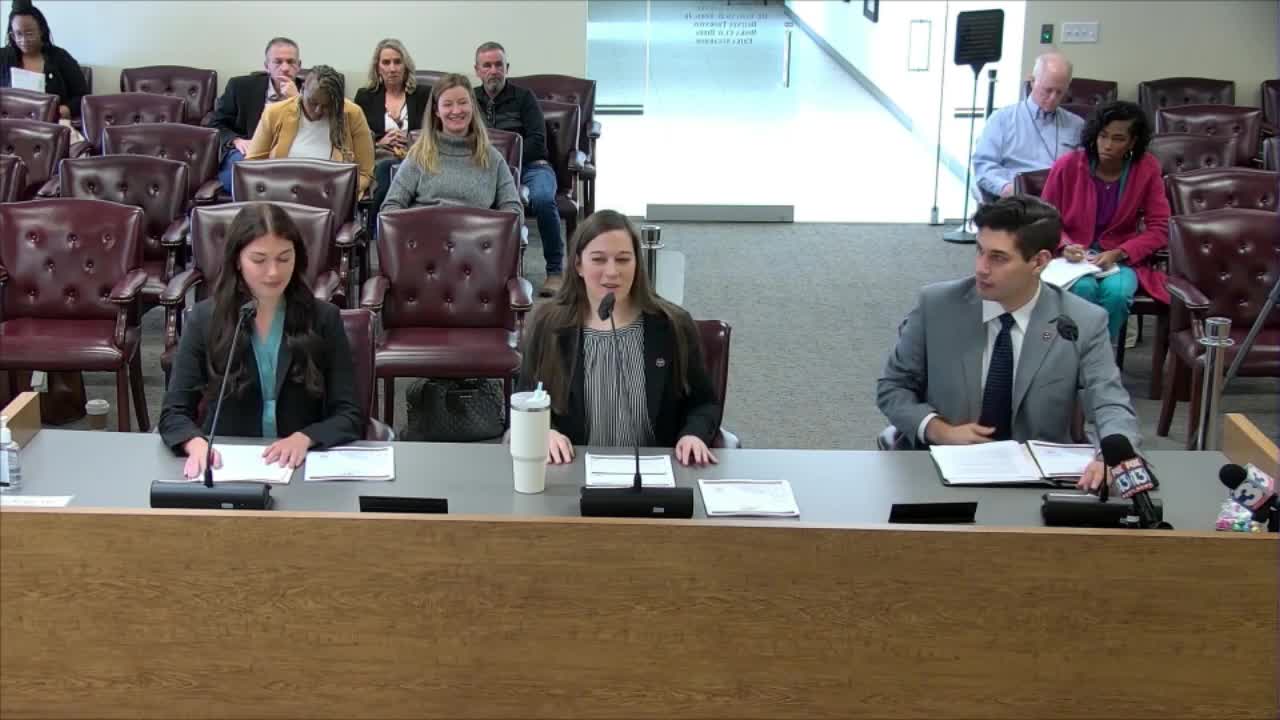
"We frequently encountered data limitations in trying to answer those questions," Lauren Huddleston, principal advisor in the comptroller's Office of Research and Education Accountability (OREA), told the committee. She and two colleagues summarized an investigation requested by Lieutenant Governor McNally into how long felony cases take to dispose, whether people commit new crimes while waiting for disposition, how charges change between arrest and disposition, and sentencing lengths.
OREA investigators said they combined two approaches: a detailed, on-site sample of cases observed in Shelby County courtrooms and an aggregate analysis of criminal court clerk filings. "We spent over a hundred hours at the Shelby County Criminal Justice Center observing court proceedings," Erin Brown said. From the observers' sample of 97 general sessions cases, Brown reported: "25% of those cases were disposed in 37 days or fewer. Half of the cases were disposed of in under 63 days." David Melendez, who led the comptroller's bail analysis, told the committee average bail amounts had risen, with Shelby County's 2024 average about $33,000 compared with roughly $23,000 in August 2022.
The report said the work was limited by the way criminal-justice data are stored. "Data in the criminal justice system really exists in silos," Brown said. She and Huddleston said the county's general sessions and criminal court case numbers do not remain consistent as a case moves through the system, which prevented the comptroller's team from creating a large, end-to-end dataset. The team could not produce a reliable, county-wide rearrest rate for defendants released pending disposition because it could not link records across agencies.
Where the researchers could trace cases, they reported low absolute numbers of defendants rearrested while on pretrial release: "Of those 95 defendants whom we saw disposed, 7 were rearrested for a new offense while they were on pretrial release," Brown said, adding some apparent rearrests proved to be warrants or TDOC custody on closer review. The report's analysis of charge flows found that roughly 60% of felony charges remained unchanged from filing to disposition in criminal court across 2018'123, and that change patterns (plea to reduced or increased charges) were relatively stable year-to-year.
The comptroller team offered three primary recommendations to Shelby County officials: begin collecting and publicly reporting a defined set of metrics (the report includes 18 suggested metrics and definitions); judges should consider administrative steps to reduce case-processing delays (the team identified attorney appointment and defense counsel changes as leading causes of continuances); and state lawmakers should consider improvements to statewide reporting systems. Huddleston emphasized one technical change the office views as essential: "The urgent need for a unique case ID that remains consistent to a case as it moves between general sessions jurisdiction and criminal court jurisdiction."
Local stakeholders who testified after the presentation urged quick action. Rob Walker of Memphis Crime Beat praised the report's focus on "transparency and accountability" and described a volunteer court-watch program he runs. "Without data, you can't manage it," Walker told the committee. Leslie Taylor, executive director of Memphis Crime Beat, asked commissioners to require county agencies to publish the 18 metrics within a year and suggested naming a local leader to coordinate data collection and publication.
Commissioners on the committee thanked the comptroller team and discussed next steps. Commissioner Bradford said the report "gives us meat" for forthcoming local proposals on transparency. The Commission later voted to receive and file the comptroller's report; the motion was moved by Commissioner Mills and seconded by Commissioner Caswell and carried in committee with five aye votes (Caswell, Sugarman, Mills, Wright and Bradford).
The comptroller investigators cautioned that many of their larger conclusions were limited by missing links across agency data systems and that fuller answers would require sustained local work to connect general-sessions records, criminal court filings and community-supervision data. The report and the committee discussion centered on operational reforms counties can make now (case-flow management, attorney appointment processes, tracking continuances) and on longer-term technical fixes (a unique case ID and shared, published metrics) that would let officials, researchers and the public follow cases from arrest to final disposition.
If adopted, the comptroller's recommended metrics include items intended to directly address the lieutenant governor's questions: total number of days to resolve a case, number of continuances granted, whether a defendant was arrested while on pretrial release, the term of plea agreements offered by the prosecution, and a consistent case identifier across court levels. The report also points officials toward Justice Counts (a Council of State Governments/Department of Justice initiative) and Florida's statutory approach as models for standardized definitions and statewide reporting.
The committee did not adopt local policy during the presentation. The comptroller staff urged stakeholders to begin publishing and standardizing metrics locally and to engage judges and court clerks in case-flow reform. Commissioners signaled interest in follow-up briefings and in exploring both county-level administrative changes and potential state legislative remedies.
Votes at a glance
- Resolution to receive and file the Tennessee Comptroller's Office OREA report on Shelby County criminal justice system: moved by Commissioner Mills, seconded by Commissioner Caswell; committee recommendation: approved (5-0 in committee).