Shelby County juvenile court clerk seeks 10 staff and $17,000 for cloud storage to support court digitization
Loading...
Summary
Juvenile court clerk Janine Gordon asked the Budget & Finance Committee for 10 full‑time employees and $17,000 to digitize records and expand e-filing, while launching a garnishment project and a new summons/subpoena/warrant system.
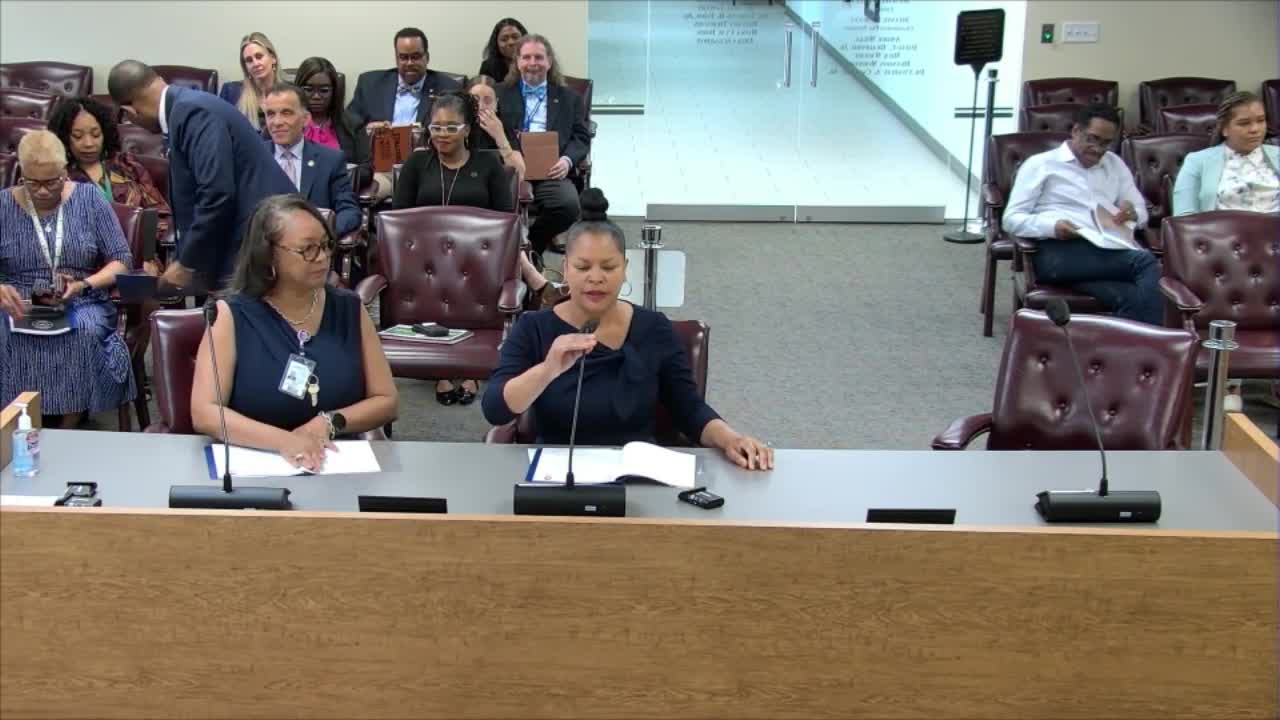
Janine Gordon, Shelby County juvenile court clerk, told the Budget & Finance Committee on April 9 that her office must expand staff and invest in digital systems to sustain court operations as the court requests additional magistrates.
Gordon said the clerk’s office has used the same funded staffing level since 2021 and this was her first formal budget request since her 2022 election. She described several operational initiatives: a recently launched real-time summons, subpoena and warrant system (SSW); a target of 90% paperless handling for the truancy docket; a planned e-filing rollout for attorneys and self-represented litigants in fiscal 2026; and a request for cloud storage managed by the Register of Deeds at a cost Gordon estimated at $17,000.
The clerk requested 10 full-time staff positions to cover minute clerks, records, and legal support tied to anticipated increases in magistrate workload. "If there are two new magistrates, we need two new minute clerks," Gordon said. She said three additional hires are needed to relaunch a garnishment project suspended during COVID and to support the office’s growing digital workload as the court moves toward the Quest system.
Gordon told commissioners her office achieved the highest summons and subpoena service rate in 15 years but that some process officers earn less than $35,000 annually while using personal vehicles and protective equipment. She said the child-support order mailing and service task previously handled by Maximus (the former child-support vendor) is now the clerk’s responsibility; Gordon said she is negotiating with the vendor Veritas to take that function back and that continuing to send orders by paper has tripled envelope and paper costs.
Gordon said the SSW system went live the day before the hearing and that the office expects to finalize e-filing in FY26. She invited community organizations to apply to partner with the court through a voluntary program and said the office will hold district-level "influencer conversations" to present data and coordinate services.
What’s next: Gordon said she will continue implementing digitization plans and will provide commissioners with follow-up information on vendor negotiations and the e-filing timetable. Commissioners asked for collaborative opportunities among clerks’ offices; Gordon said elected clerks meet regularly and share best practices.
Ending: Gordon said the paperless transition entails upfront costs but would reduce long-term storage and supply spending and support court efficiency as magistrate workloads grow.