Get Full Government Meeting Transcripts, Videos, & Alerts Forever!
Get email alerts on the Juvenile Court Budget topic
No spam. Unsubscribe anytime.
Shelby County juvenile court asks commissioners for $849,190 to ease caseload delays and shore up magistrate pay and capacity
Summary
Judge Tarek Sugarman asked the county Budget & Finance Committee to approve three budget changes totaling $849,189.75 — moving 30% of five core magistrates’ salaries from a DHS grant into the court’s personnel budget, funding two additional magistrates, and increasing core magistrate pay — to address rising caseloads and retention risks.
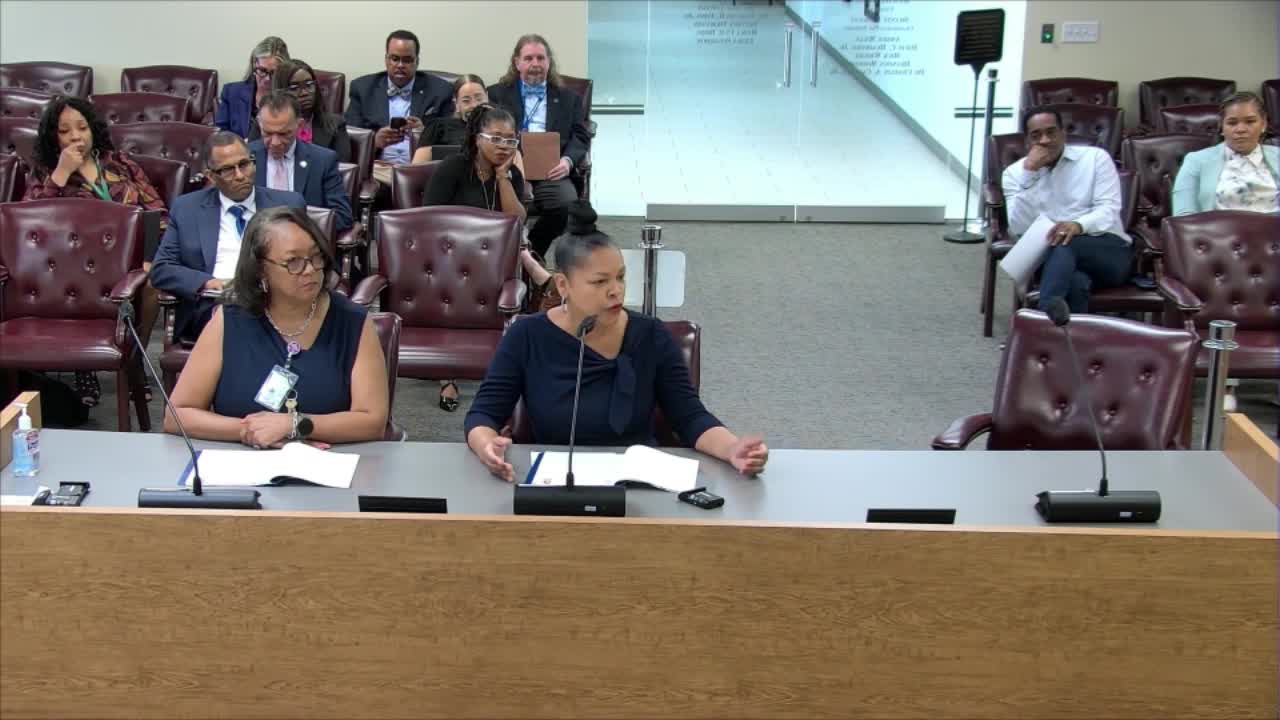
Judge Tarek Sugarman of Shelby County Juvenile Court asked the county Budget & Finance Committee on April 9 to approve three budget changes totaling $849,189.75 to expand judicial capacity, shore up magistrate compensation and reduce case-processing delays.
Sugarman told commissioners the court is requesting (1) that 30% of five core magistrates’ salaries now funded through a Department of Human Services (DHS) grant be shifted to the court’s personnel budget (a fiscal impact cited in the presentation as $255,000); (2) funding for two additional magistrates (presentation cited $466,444); and (3) a pay increase for core magistrates that Sugarman described as totaling about $127,745.35. "These budget requests are about meeting the demand, retaining critical personnel, and ensuring every child and family who comes before the court receives timely, informed, and fair justice," Sugarman said.
Why it matters: Sugarman said juvenile court work is time-sensitive and that the court cannot meet statutory time lines for adjudication and dispositional hearings under current capacity. He reported that in fiscal year 2025 the court heard more than 4,000 dependent-and-neglect cases and more than 2,000 custody and visitation cases. Court staff and magistrates also manage truancy (school advocacy) dockets, preliminary hearings and motion dockets that Sugarman said are contributing to backlog.
Staff and commissioners pressed for details during the committee hearing. Chief Administrative Officer Stephanie Hill said child-welfare matters make up roughly 75% of the court’s work and that the court is hearing "over 500 child welfare cases per week." Hill and Sugarman said the DHS grant will continue; the request is to move the 30% salary share from grant-funded lines into the court’s general personnel budget so the magistrates currently restricted by grant rules can hear a broader set of cases. Hill said the court and county are exploring permissible alternative uses for the freed grant funds, such as supporting a child-support magistrate or supportive services in child support.
Court counsel Erica Evans described one example of constrained capacity: the court currently runs a single truancy docket ("school advocacy") that can hear about 25 cases per week; the next available court date for those matters was reported to be in late May. Evans said two additional magistrates could enable an all-day truancy calendar and increase weekly hearing capacity by an estimated 212 cases per week.
Sugarman also told commissioners the court risks losing experienced magistrates because current pay lags comparable positions in Davidson (Nashville) and other counties. He asked the county to support a minimum magistrate salary benchmark to improve retention; the presentation compared local magistrate salaries with ranges he said were in Davidson County and other jurisdictions. When Commissioner Wright asked for comparative salary figures for Hamilton and Knox counties, Sugarman said the court had requested them and would provide numbers within about a week.
The presentation described facility and operational constraints that are reducing hearing capacity. Sugarman said the court was displaced from Building 616 after an April 29 incident in 2024 and operated for a period at the Youth Justice and Education Center (YJEC), which limited hearing capacity and required docket compression. He reported transport limitations prevented use of certain courtrooms (transport to the 616 location would have allowed about 10 additional dockets) and that the court had processed roughly 3,174 matters at YJEC during the displacement. Sugarman said lingering roof leaks and some administrative-area plumbing issues remained under remediation, and that consolidated waiting areas reduce privacy for victims, witnesses and attorneys.
On data and case management, Sugarman and Hill said the court is preparing to shift to the state-requested Quest case-management system, which they said will improve granular data collection (ZIP code and demographic analytics) and allow the court to provide more district-level information to commissioners. Sugarman discussed interstate peer visits organized with the Annie E. Casey Foundation to study jurisdictions with faster turnarounds and deeper data systems.
Sugarman gave a single total for the three requests: $849,189.75. Commissioners asked for supporting breakdowns and for documentation they can review as part of the county budget process.
What’s next: Commissioners did not take any formal vote during the presentation. Sugarman said the court will follow up with comparative salary data for Hamilton and Knox counties, and the court and county staff said they will explore options to spend the freed DHS grant funds if the 30% salary share is moved to the court’s general budget.
Ending: Sugarman closed by reiterating the court’s workload and retention concerns and by noting the court’s intention to supply additional data and comparative salary information to commissioners for their budget deliberations.