Get Full Government Meeting Transcripts, Videos, & Alerts Forever!
Get email alerts on the Flood Mitigation topic
No spam. Unsubscribe anytime.
City updates flood-mitigation program; engineering staff cite easements, utilities and rising costs as main hurdles
Summary
The city’s engineering commissioner gave an extensive update on a multi-year flood mitigation program, saying staff expect to begin construction this year on seven projects but face challenges including private easements, utility relocations and higher-than-anticipated construction costs.
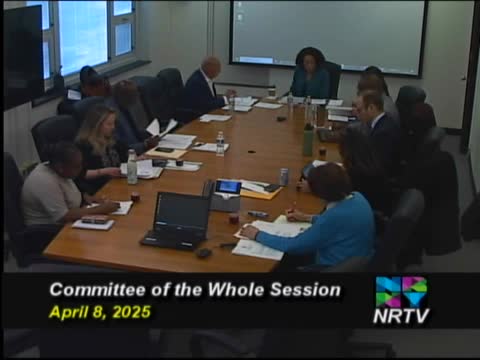
The city’s commissioner for engineering delivered a detailed update to the Committee of the Whole on the municipal flood mitigation program, briefing elected officials on the status of designs, construction plans and grant work.
"We successfully completed three. We have 15 active projects. We expect to be into construction on seven of those projects this year," the commissioner said, outlining a program that followed a watershed study that identified hundreds of potential fixes and was honed into a 10‑year project inventory.
The commissioner told the council staff have procured design services for seven of eight priority 2025 projects and expect final plans for some sites, such as Prince–Remington, by August. Work completed last year included catch basin replacements, CCTV pipe inspections and channel cleanings. The commissioner said the Hutchinson River corridor clearing removed roughly 2,300 cubic yards of material and about 3,400 linear feet of streambed that had reduced capacity.
Councillors asked for clearer public-facing mapping and more community meetings. Council member (first name not specified) commended the work at the Hutchinson River and asked whether residents could see project locations in an online map; the commissioner said staff would explore a publicly accessible page with project status and timeline links and that pre‑construction meetings and neighborhood briefings will be held once a successful bidder is selected.
The commissioner listed several design and implementation challenges revealed as staff moved concepts into detailed design: the need to secure new or modified easements across private property; title searches where ownership is unclear; utility conflicts requiring relocation or Department of Health approvals (in one example Veolia was named as a frequent utility partner); and permits from the New York State Department of Environmental Conservation and the U.S. Army Corps of Engineers.
The presentation included project examples and updated cost estimates. One project, Wyewood and Pelham, was estimated at $1.7 million at the conceptual phase and is now estimated at about $4.2 million due to geotechnical and hardscape work. The commissioner described a complex set of interventions at that site — upsized culverts (the original 6'x6' culvert proposed to be replaced by a 12'x8' structure), a new bypass outfall, and associated utility relocations.
Staff are packaging design work to strengthen later construction‑grant applications, the commissioner said, and reported more than $13 million in stormwater grants secured to date. A grant administrator, Nicholas Ofas, was identified as a city resource tracking funding programs and application timing.
Council members repeatedly raised staffing concerns. The commissioner said there are critical vacancies — deputy/assistant city engineer positions, a junior civil engineer and a manager of sewers and drains — and that workload and grant administration depend on filling those roles. "I'm not as available as I was," the commissioner said, urging that hiring continue to be prioritized.
Council members recommended that staff pursue non‑construction forms of assistance as well: applying for nonprofit or resiliency grants to reduce long‑term utility and operating costs where applicable, and using workforce development clauses in construction contracts to create local hiring pathways for long‑term program work.
The presentation closed with staff commitments to continue bidding and procurement for 2025 construction projects, maintain enhanced drainage maintenance (catch basin cleaning and CCTV inspections), pursue grant agreements awaiting execution, and hold community pre‑construction meetings for affected neighborhoods.
Council members thanked the department staff and encouraged continued public communications and a publicly accessible project dashboard when resources permit.