Get Full Government Meeting Transcripts, Videos, & Alerts Forever!
Get email alerts on the Voter Mobilization topic
No spam. Unsubscribe anytime.
Tulsa commission urges members to gather local voices and boost voter turnout
Summary
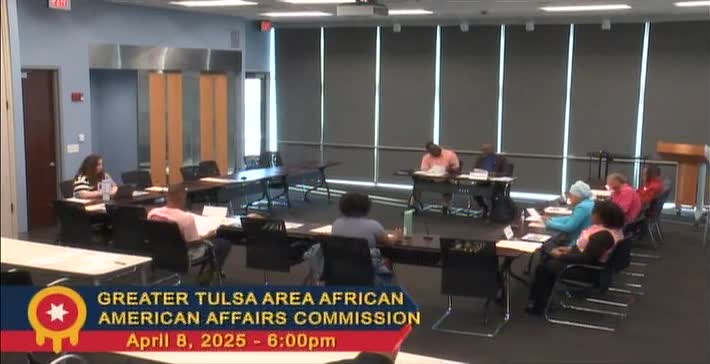
The African American Affairs Commission opened its meeting with a chair report calling for intentional outreach to city councilors and for each commissioner to list five community connections to gather concerns and mobilize voters after posted turnout data showed low participation in parts of the city.
Ray'Chel Wilson, chair of the African American Affairs Commission, urged commissioners to be more intentional about gathering African American community voices and using those connections to increase voter turnout.
Wilson said she identified the top Tulsa council districts by African American population and asked commissioners to contact their councilors and compile lists of organizations or neighborhood networks they represent. “We have of our 9 districts, 6 of them have over 5,000 African Americans in those districts,” Wilson said, and asked each commissioner to “List 5 organizations you're part of or spaces you're part of and who are key people in those organizations.”
Wilson presented packet data drawn from the 2020 U.S. Census and local turnout figures to show disparities in participation across Tulsa. She highlighted turnout differences between North and South Tulsa and mayoral election numbers, saying the data show low participation in many neighborhoods and arguing that turnout can be increased through education and local outreach. “When we show up, we shape outcomes,” Wilson said.
Commissioners provided examples of organizations they are connected to — including churches, libraries, neighborhood associations, local nonprofits and advisory boards — and the commission agreed to collect those connections by email so committees can route the concerns or celebrations they surface to the appropriate committee (policy, education, culture) for follow-up.
During discussion, commissioners and other meeting participants raised several voter-mobilization tactics: distributing sample ballots or “mock” ballots at door knocks to familiarize new voters with the process; partnering with the League of Women Voters and Ballotpedia for voter information; using churches as a trusted vehicle for outreach; and targeted events to explain how small turnout margins can determine election outcomes. One commissioner encouraged showing the concrete numbers that decide races to counter apathy.
The commission noted some barriers raised in discussion: removal of inactive voters from rolls and confusion about eligibility after incarceration. Members said those issues should be addressed in outreach materials and in partnerships with election offices and community organizations. Wilson asked committees to integrate voter education and mobilization into their work plans and promised follow-up emails and a sign-up form to collect each commissioner’s community connections.
The commission did not adopt new formal election-related policies at this meeting; the discussion focused on outreach steps and education strategies to increase turnout in neighborhoods with historically low participation.
Looking ahead, commissioners said they will use the commission newsletter and partner organizations to publicize events, sample ballots and factual resources about voting rights and processes.