Get Full Government Meeting Transcripts, Videos, & Alerts Forever!
Get email alerts on the Property Tax And Assessment topic
No spam. Unsubscribe anytime.
Property appraiser: Wellington—s 2024 value rise, ag classifications and looming state bills could reshape base
Summary
The county property appraiser told Wellington officials the village—s taxable values rose substantially in 2024 and outlined how agricultural classifications and two proposals in Tallahassee could affect local tax revenue. She recommended outreach and monitoring as the Legislature considers tax changes.
Wellington property values rose sharply in 2024, but changes to state law could alter how much of that value appears on local tax rolls, the Palm Beach County property appraiser—s office told village officials.
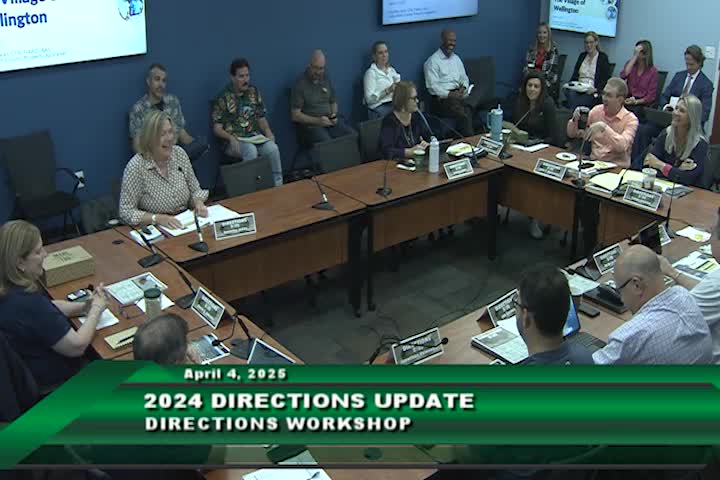
At a village visioning session on the appraisal roll, a property appraiser identified in the meeting only as Ms. Jacks said Wellington—s assessed value increase from 2023 to 2024 was 8.52% and that this year—s change was likely to come in lower — "something between 6 and 8, sort of in that range." She said new construction will help, but classification rules for agricultural land play a large role in the county—s tax base.
The appraiser said agricultural classification applies only to land used for a bona fide agricultural business; buildings and equipment are generally taxable. "Ag classification is applied to only the land in a property that has a bona fide agricultural business taking place on the property," she told the council. She explained farmers must apply annually and that the application must show a profit intent and evidence such as business plans or income records.
Why it matters: Wellington—s tax base includes a significant amount of land on agricultural classification because of the region—s equestrian uses. The property appraiser warned that bills under consideration in the Florida Legislature would change that balance by exempting improvements on ag-classified land or exempting tangible personal property used in farming, and that those proposals would hit Wellington harder than many other places.
"If you were to exempt ag classified improvements, it would be a big hit," Ms. Jacks said, noting Wellington has more and larger agricultural improvements (stables, barns and related equestrian buildings) than many other counties. She also flagged another proposal to exempt equipment inside agricultural facilities (notably sugar mills), a change she said "may survive" in some form and would affect Palm Beach County significantly. The property appraiser said she understood one of the proposals currently appeared to be stalled but added, "these things come back." She urged local leaders to communicate with state representatives about potential impacts.
Outreach and taxpayer education: The appraiser—s office said it has prepared brochures explaining what qualifies for agricultural classification and what does not, and that it will step up outreach to clear up common misconceptions (for example, that keeping a few chickens or operating a nonprofit equine therapy program automatically qualifies a homeowner for agricultural classification on the entire parcel).
The office also described technical items that will change local rolls: annexations and newly platted subdivisions added assessed parcels to Wellington—s 2025 roll (the appraiser cited 37 parcels from a recent annexation and named several plats such as Blue Cypress and Lotus) and noted that new construction is captured on the tax roll only based on the property status on January 1.
What council members asked: Officials pressed for detail about whether large commercial properties such as the local mall were on the county—s appeals docket and were told the appraiser—s office is still finalizing values for some large parcels and could report back to the village next week.
Ending: The county appraiser—s presentation left Village officials with two clear near-term tasks: increase public outreach about ag classification rules and track state legislative proposals that could change how much of Wellington—s equestrian and agricultural activity contributes to the tax base.