Get Full Government Meeting Transcripts, Videos, & Alerts Forever!
Get email alerts on the Marine Safety And Oil Transport Oversight topic
No spam. Unsubscribe anytime.
Prince William Sound RCAC urges vigilance after Exxon Valdez, calls for buoy and SPAR funding
Summary
Marco Haggerty, a board member of the Prince William Sound Regional Citizens' Advisory Council, told the Kenai Peninsula Borough Assembly April 1 that ongoing oversight of tanker operations remains vital and urged support for restored buoy operations and sustained SPAR funding.
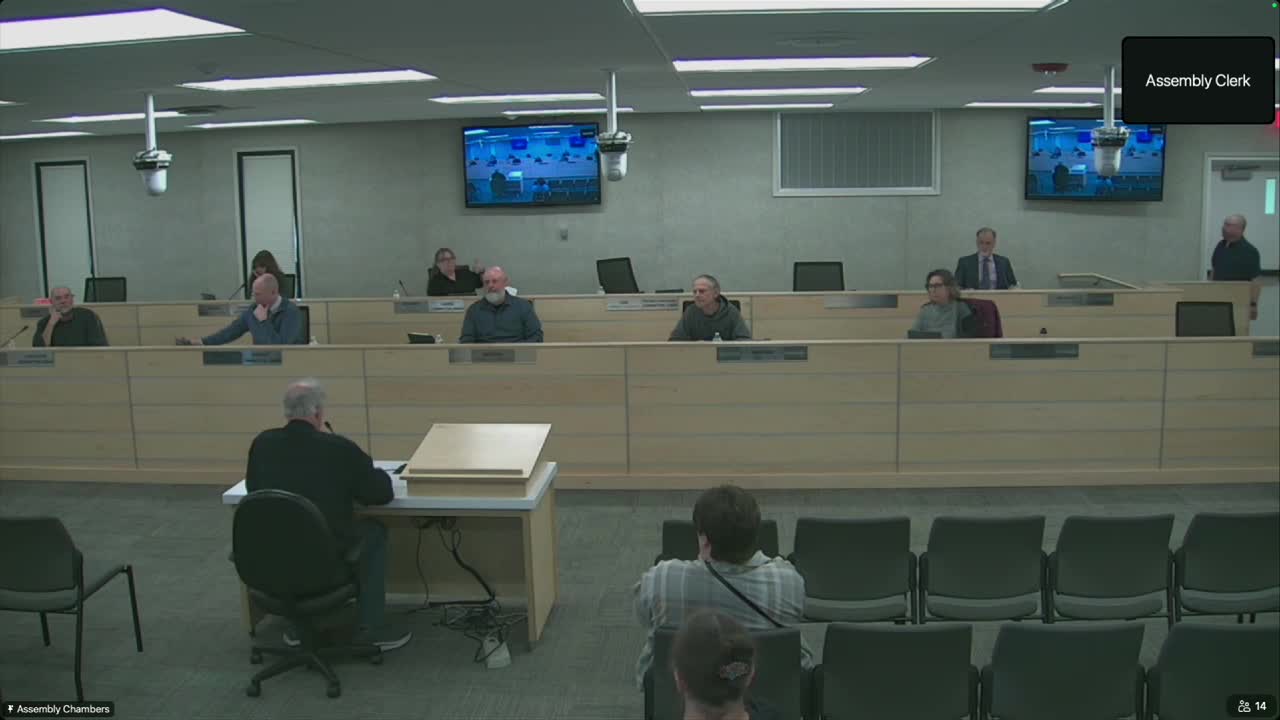
Marco Haggerty, a board member of the Prince William Sound Regional Citizens' Advisory Council (RCAC), briefed the Kenai Peninsula Borough Assembly April 1 on the council's role in oil-transport oversight and current priorities.
Haggerty recalled the Exxon Valdez grounding on March 24, 1989, and the subsequent Oil Pollution Act of 1990 and creation of the RCACs. He summarized the RCAC's mission to promote the environmentally safe operation of Alyeska Terminal and associated tankers and described ongoing RCAC projects including monitoring invasive species via ballast-water tracking, scientific oversight of habitat changes, and advocating for robust funding for the State of Alaska's Spill Prevention and Response (SPAR) division.
Haggerty highlighted the Seal Rock buoy, which measures wind speed and wave height at Hinchinbrook Entrance and is critical for Coast Guard 'go/no-go' decisions for laden tankers entering and leaving Prince William Sound. He said Seal Rock and several other buoys have been out of service; the Seal Rock buoy was repaired temporarily last year but failed again after winter storms. Haggerty told the assembly there is a Senate joint resolution under consideration asking Alaska's congressional delegation and the national buoy center to provide funding and maintenance; he said borough-level support (a resolution or phone calls) to encourage buoy maintenance would be helpful.
Haggerty noted the RCAC is federally mandated by the Oil Pollution Act of 1990 but receives operational funding from industry (Alyeska Pipeline Service Company) and said the council's guiding documents protect its independence to conduct research and oversight.
Assemblymembers thanked Haggerty for his long service and asked whether borough action could help buoy funding; Haggerty confirmed a local resolution in support of buoy funding or direct calls to congressional delegations could be useful. The assembly did not take formal action on the presentation; members indicated interest in supporting buoy funding and SPAR adequacy in future work by the assembly and by the borough's Cook Inlet Harbor Safety Committee.