Get Full Government Meeting Transcripts, Videos, & Alerts Forever!
Get email alerts on the Budget topic
No spam. Unsubscribe anytime.
Superintendent outlines FY26 budget choices; central‑office reductions and labor contingency highlighted
Summary
Superintendent Miriam Rogers briefed the board on the FY26 budget outlook, detailing two years of central‑office supervisory reductions, $14 million in non‑labor reductions, and contingency plans that could affect labor if state or county funding falls short.
Superintendent Miriam Rogers provided a synopsis of the district’s FY26 budget approach and next steps, telling the board the district has taken multiple non‑labor and structural steps to close budget gaps and will continue to assess the local impact of state and county budget actions.
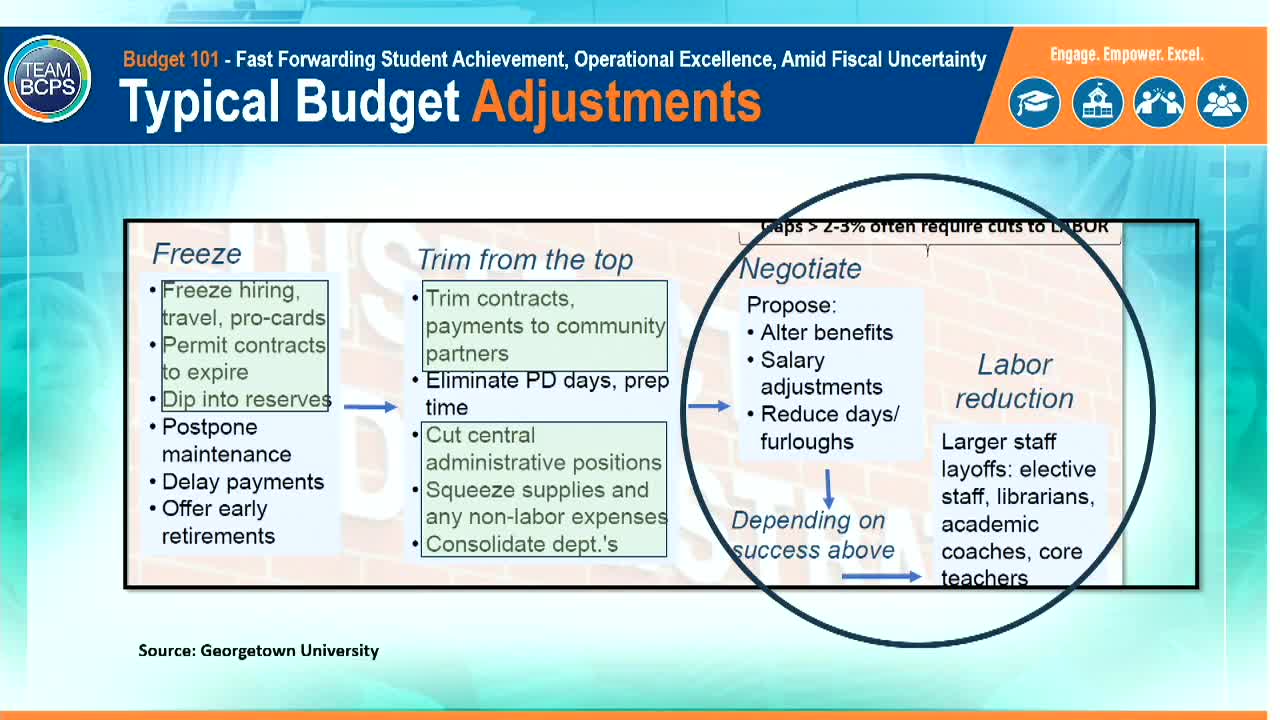
Rogers said the district has frozen hiring for two years, allowed contracts to expire to renegotiate terms, used fund balance with county approval, trimmed central‑office administrative positions, consolidated departments and squeezed supplies and non‑labor expenses. She said the district has reduced supplies and materials by $14 million over two years, cut conference travel by 79% and travel by 85%, and reduced cell phone stipends by 42%.
The superintendent said the district abolished 70 central‑office supervisory positions over two fiscal years (a reported 24% reduction), including positions at chief, executive director, director, coordinator and specialist levels. Rogers said the district now has the smallest cabinet among medium‑ and large‑sized school systems in Maryland and that many remaining central‑office functions directly support school operations (payroll, transportation, IT, special education oversight and compliance work).
Rogers told the board that research and budget practice require addressing non‑labor and structural steps first, and that if the gap remains larger than about 2–3% districts must consider labor changes. She said the district has not yet implemented significant labor reductions but warned that state and county budget decisions over the coming days could require returning to the bargaining table. Tabco (the teachers’ union) representatives present during public comment had said funding uncertainty could threaten negotiated multi‑year contracts.
The superintendent also reviewed progress on the 2021 efficiency study: of 97 recommendations, 93 had final outcomes; some recommendations remained “no” because they were either process changes, required additional funding, or fell outside the district’s purview. Rogers said the district has implemented many of the report’s recommendations and would continue to examine remaining items.
Rogers outlined next steps in the budget calendar: the county executive will release a budget proposal (April 11), and the County Council will take final action (May 3). She asked the public to remain engaged and promised further updates as state and county budget clarity emerges.
Why it matters The superintendent’s briefing outlined multi‑million‑dollar adjustments already made and signaled the district’s limited remaining non‑labor options, while flagging that unresolved state or county funding could force negotiations affecting labor costs. The board and unions will continue monitoring state and county budget actions in the coming weeks.
What’s next County executive’s budget release on April 11 and County Council action on May 3; district will update the board and stakeholders as funding clarity develops and will proceed with negotiated processes if labor adjustments are necessary.