Get Full Government Meeting Transcripts, Videos, & Alerts Forever!
Get email alerts on the Veterans End Of Life Care topic
No spam. Unsubscribe anytime.
Gentiva Hospice tells advisory committee veterans often enroll late, urges earlier referrals and veteran volunteers
Summary
At the April 17 Veterans Affairs Advisory Committee meeting, Gentiva Hospice described hospice services available to veterans, said many veterans come to hospice very late, and asked the committee to help with outreach and veteran volunteer recruitment.
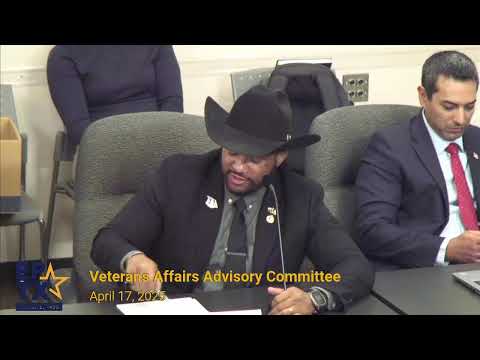
Desiree Yearwood, executive director of Gentiva Hospice, told the El Paso Veterans Affairs Advisory Committee on April 17 that hospice providers often see veterans only hours or days before death and urged earlier referral and outreach to increase use of the full hospice benefit.
Yearwood said hospice provides medical symptom control, pain management, spiritual care, volunteer companionship and bereavement support, and that those services can be covered by the Department of Veterans Affairs, Medicare Part A and Tricare. She said Gentiva follows families for bereavement support up to 13 months after a patient’s death and provides volunteer respite care and short-term contracted respite stays when needed.
Why it matters: Yearwood argued that earlier hospice enrollment allows staff and volunteers to deliver more of the care and nonmedical supports—such as spiritual care, volunteer companionship and family education—that improve end-of-life experiences for veterans and their families. She said many veterans are not enrolled in VA benefits and therefore do not always learn about end-of-life supports that are available to them.
Key details and examples
- Yearwood said the program participates in the national We Honor Veterans partnership and that Gentiva’s El Paso operation provides a higher-than-required proportion of volunteer-delivered care (12–14% of hands-on care, she said, compared with a 5% minimum). She described bedside final-salute ceremonies and volunteer support that can facilitate veterans’ end-of-life wishes, including an example in which volunteers helped arrange an at-home wedding for a terminally ill service member.
- On coverage, Yearwood said hospice can be accessed via the VA (for service-connected veterans), Medicare Part A (no copays or deductibles once on hospice) and Tricare; Gentiva also works with Texas Medicaid and commercial insurers when applicable. She said hospice enrollment does not always require prior VA enrollment because Medicare Part A can cover hospice regardless of VA enrollment status.
- Services described included volunteer companionship and respite (including short contracted respite stays), symptom and pain management, spiritual care from chaplains, social-worker–led family support and bereavement counseling for up to 13 months after death.
Questions and community concerns
Committee members asked whether hospice referrals must come through the VA; Yearwood said referrals can come either from the VA or directly to hospice and reiterated hospice coverage options. A committee member noted that veterans with dishonorable discharges who lack VA eligibility may still access hospice services through Medicare, and Yearwood confirmed Gentiva works with Medicare and other payers.
Volunteer and outreach request
Yearwood asked the committee to help Gentiva recruit veterans as volunteers to provide bedside companionship for veteran patients, saying veteran volunteers often provide a better peer match than younger student volunteers. She also asked for permission to do community education and enrollment outreach to help veterans learn about hospice benefit eligibility and timing.
Ending
Yearwood’s presentation closed with a request that the committee allow Gentiva to perform community education and to partner on recruitment of veteran volunteers and information events so more veterans can access hospice services earlier in the course of illness.