Get Full Government Meeting Transcripts, Videos, & Alerts Forever!
Get email alerts on the Affordable Housing topic
No spam. Unsubscribe anytime.
Baldwin Park council hears update on two Habitat for Humanity for‑sale affordable housing projects
Summary
Habitat for Humanity updated the Baldwin Park City Council on the Stewart and Torch Street projects, saying construction financing has closed for the Stewart site and that relocation of utility poles on Marlinda Street is delaying the Torch Street plan review.
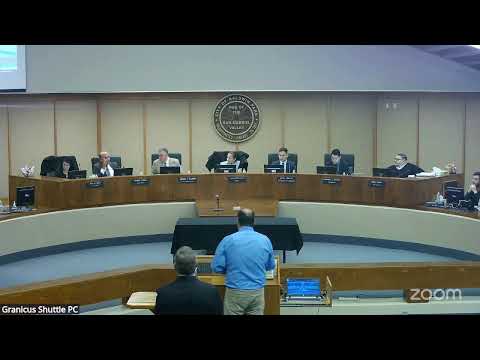
Habitat for Humanity representatives told the Baldwin Park City Council on April 16 that construction financing for the Stewart project has closed and construction is expected to begin within one to two weeks, while the nearby Torch Street project faces potential redesign work if Southern California Edison’s utility poles cannot be moved.
Grant Powerhead, a presenter with Habitat for Humanity, told Mayor Avila and council members the Stewart project at 4428 Stewart — adjacent to Los Angeles Street and incorporating the former Baldwin Park Presbyterian Church — will total 15 units: four new townhome units plus 11 units made by adaptively reusing space inside the church. “We anticipate completing construction by late 2026,” Powerhead said, and added that the funder “has approved us and closed a loan,” allowing construction to start soon.
Powerhead said Torch Street, a separate vacant lot with a revised plan that now calls for 13 attached townhome units, is entering a new round of plan and design review. The project team plans to resubmit the design package and is “hoping to be in plan check by September,” he said. The project team and city staff are discussing relocation of two Edison poles on Marlinda Street; Powerhead reported that Southern California Edison initially said moving the poles was “not feasible, technically.” He said city public works is preparing a letter of determination and that the project team expects that analysis in two to three weeks.
David Goodale, on the design team, described both projects’ site plans and accessibility features. He said the townhome units are mostly three‑bedroom layouts, each with private outdoor space and access to shared open areas. “All of these units will be fully accessible at the ground floor, including bedrooms and bathrooms,” Goodale said of the Torch design; he described a craftsman‑inspired architectural character for both sites.
Council members pressed Habitat on the pole relocation, project timing and affordability terms. One resident raised concerns about site maintenance and communication after a prior missed meeting; Brian Wong, identified in the presentation as Habitat’s CEO, apologized for the scheduling error and said Baldwin Park is not “a second or third choice” for the organization.
On affordability and how Habitat markets for‑sale units, Powerhead said both projects are 100 percent for low‑income buyers and described the application and selection process. Habitat conducts an open application window and then randomizes qualified applicants rather than using first‑come, first‑served rules. He said homebuyers pay about 30 percent of their income for housing costs and Habitat provides the subsidy to fill the gap to an affordable mortgage. Powerhead also described an affordability covenant: Habitat places a 55‑year affordability requirement on the properties and retains a right of first refusal so sold units remain in the affordable pool.
Council members asked about the effect of rising costs and insurance on household mortgage payments. Habitat said its construction cost estimate is roughly $350–$400 per square foot, and that higher rates or insurance costs would be reflected within the model so households still pay roughly 30 percent of income for housing expenses. Powerhead used prior Habitat projects to illustrate the model, saying the program preserves affordability across decades by buying back and re‑reselling homes under stipulated limits.
Councilmembers asked staff to help track the projects and provide periodic updates. Councilmember Damien suggested staff provide updates every six to nine months, and several members encouraged Habitat to post project timelines and past work on its website to improve community awareness.
If both projects proceed as described, Habitat said they will produce a total of 28 for‑sale units for low‑income buyers in Baldwin Park. Habitat representatives offered council tours of completed Habitat projects and invited council members to volunteer on build days.
No formal council votes were taken during the presentation; public works and Edison analysis on the Marlinda poles remain outstanding.