Get Full Government Meeting Transcripts, Videos, & Alerts Forever!
Get email alerts on the Education Funding topic
No spam. Unsubscribe anytime.
Colorado Senate adopts resolution to pursue multi‑year plan to fully fund schools after adequacy studies
Summary
The Colorado Senate adopted a joint resolution directing lawmakers to use two recent school‑funding adequacy studies to develop a multiyear implementation plan to bring per‑pupil funding toward recommended levels. The measure passed 27–5.
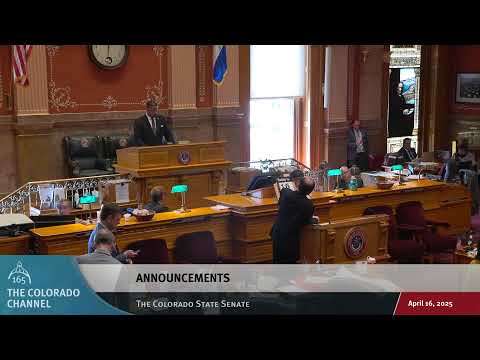
The Colorado Senate on April 16 adopted a joint resolution directing the legislature to use two recently completed adequacy studies to develop a multiyear plan to fully and fairly fund K‑12 public education in Colorado.
Senate Joint Resolution 021, sponsored in the Senate by Sen. Lisa Kipp, passed on a roll‑call vote of 27 yeas and 5 nays, with three senators excused. The measure directs lawmakers to review the findings of two independent studies and to choose study methodology and recommendations to follow while developing a plan that may include phased revenue triggers to implement the studies’ recommendations.
The resolution responds to two reports delivered to the 2025 legislature: an American Institutes for Research (AIR) cost‑modeling adequacy study and an input‑based adequacy study (referred to in the reports as APA). Both studies found that teacher pay in Colorado is too low and that the state’s school‑funding system is inequitable and inadequate. According to the APA report cited in the resolution, fully funding adequacy would require roughly $3.1 billion to $3.5 billion more annually than current levels, and about $3.1 billion more than the House bill 241448 formula would deliver when fully implemented.
“Those studies found that we are 3 and a half to $4,000,000,000 a year behind providing every child,” Sen. Kipp said on the Senate floor, urging colleagues to back the resolution and pursue a structured, multi‑year “Colorado blueprint for student success.”
Supporters said the resolution establishes intent and a path forward but acknowledged funding the gap will require difficult budget choices. Sen. Bridges, a longtime education committee member, said the resolution “throws our hat over the wall” — establishing a clear destination after the adequacy studies located a specific funding target — while warning the current General Fund priorities make immediate full funding infeasible.
Sen. Kolker urged moving beyond study to action, saying Colorado must prioritize sustained funding mechanisms rather than one‑off measures. Several senators also stressed phased approaches, dedicated revenue streams and protections for existing priorities such as Medicaid and corrections.
The resolution requests that copies be sent to the governor and legislative leaders and notes the legislature’s intent to honor the state’s $2 million investment in the adequacy studies by taking “concrete steps” to evaluate and implement the findings.
Votes at a glance
- SJR 021 — Adopted 27 yeas, 5 nays, 3 excused.
Why it matters: Two independent adequacy studies give the legislature a numeric target for funding public schools. SJR 021 signals a commitment to translate those findings into a phased funding plan; however, implementation would require future budget decisions and possible new or redirected revenues.
Sources: Floor debate and vote on SJR 021, Colorado Senate (transcript).