Get Full Government Meeting Transcripts, Videos, & Alerts Forever!
Get email alerts on the Evidence Admissibility topic
No spam. Unsubscribe anytime.
Utah Court of Appeals hears challenge to expert testimony and creditability evidence in State v. Francis
Summary
At oral argument in State v. Francis the defense asked the Utah Court of Appeals to exclude expert testimony that attached numeric probabilities to delayed reporting in sexual‑assault cases, arguing the evidence impermissibly bolstered witness credibility.
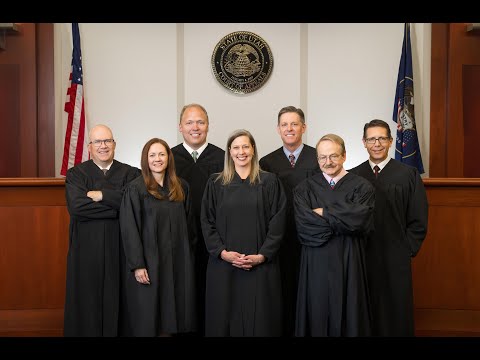
Good morning everyone. Welcome to the Utah Court of Appeals. I'm Judge Ryan Tenney. I will be chairing today's panel. Pleased to be joined by Judges Harris and Mortensen.
Natalie Scabine, counsel for the defendant in State v. Francis, told the three‑judge panel she was asking the court to exclude portions of an expert's testimony about delayed reporting in sexual‑assault cases and to distinguish the court's prior decisions. Scabine said the expert "did not tease out where his statistics or his testimony was coming from all the time," and that testimony mixed research, clinical experience and anecdote in a way she said was unreliable and unfairly prejudicial.
Scabine told the court three parts of the expert's testimony were most prejudicial: that most sexual assaults are perpetrated by someone the victim knows; that victims tend to blame themselves leading to delayed reporting; and testimony that, in the expert's view, about two‑thirds of delayed reports happen after an initial period. "That statistic was presented as if it were dispositive," Scabine argued, saying it invited jurors to treat delay as a proxy for truthfulness.
Judge Mortensen pressed on the line between permissible and impermissible testimony, asking whether the legal distinction was the difference between an expert saying a phenomenon is "common" and an expert attaching a numeric value. "If an expert is allowed to say this thing is common, but then we would say that the expert can't say if 55 to 65 percent of the cases this thing happens," Mortensen said. Scabine replied the numbers are especially prejudicial because they create a seemingly scientific basis to infer credibility.
Tara Peterson, arguing for the State, said the expert repeatedly described his opinion as based "on both" research and his experience as a clinician, victim advocate and professor. Peterson pointed the court to the evidentiary‑hearing transcript where the expert said the literature gives a range of reasons for delayed reporting and then testified at trial to the same themes. Peterson argued that anecdotal or clinical sources do not automatically render testimony unreliable under Rule 702 and that judges should evaluate the purpose and foundation of the testimony rather than categorically exclude numeric evidence.
The panel discussed precedent and evidentiary rules at length. The parties and the judges referenced appellate decisions the court cited or relied on in briefing — including Burnett, Iorg, Rammell, Lopez and Garcia‑Cardio — while arguing over how those decisions apply to expert testimony that addresses delayed reporting and credibility. Both sides pointed to Rule 702 (expert testimony), Rule 403 (prejudice vs. probative value) and Rule 608 (reputation and opinion evidence about truthfulness) in explaining the record and the contested parts of the trial testimony.
Counsel also argued related trial‑court rulings and preservation. Peterson noted the evidentiary hearing and the trial record differ in places and urged the court to view the totality of the record, while Scabine argued the trial testimony expanded beyond what the court admitted at the hearing and that portions were therefore preserved for appeal.
The argument turned to related issues the trial court decided: whether reputation or opinion evidence under Rule 608 permitted the stepmother to testify that she believed the alleged victim had a reputation for untruthfulness, and whether a lesser‑included‑offense instruction tied to the "position of special trust" theory should have been given. On the lesser‑included question Scabine argued the jury could reasonably have reached a different result if charged differently; the State responded that the record contained multiple alternate theories of non‑consent and evidence the jury could rely on, including testimony that some alleged acts occurred while the complainant was asleep or incapacitated.
After approximately the time allotted for argument and questioning, the panel submitted the case for decision. Judge Tenney thanked counsel and said the court would "do our best to issue an opinion as soon as we can."