Get Full Government Meeting Transcripts, Videos, & Alerts Forever!
Get email alerts on the Refuse Rates topic
No spam. Unsubscribe anytime.
Supervisors approve overhaul of city refuse rate process for June ballot; competing measure tabled
Summary
The Board of Supervisors voted unanimously to place an ordinance before voters to replace the 1932 refuse rate-setting process with a new structure centered on a controller-appointed rate administrator and a reconstituted refuse rate board. A competing measure was tabled after debate about corruption and past overcharges tied to Recology.
The San Francisco Board of Supervisors voted unanimously on March 1 to send to the June 7 ballot a measure that would restructure how refuse collection rates are set in the city, replacing the 1932 rate-setting process with a new system that centers the controller as refuse rate administrator and establishes a reconstituted refuse rate board.
The measure (item 24) would require the controller to regularly monitor refuse rates, to recommend adjustments to a newly constituted refuse rate board, and would expand the board’s authority while authorizing new competitive selection and performance requirements for refuse collection permits. The proposal also codifies the refuse provisions into the health code and would allow the board, the mayor and the refuse board to adopt future ordinance changes by an eight-vote supermajority.
Why it matters: Supporters said the 1932 framework had become vulnerable to conflicts of interest and, in recent years, produced an outcome that left ratepayers with large overcharges. Supervisor Aaron Peskin, the principal sponsor, described the measure as “a fantastic fix” that creates new checks on the private contractor that provides most curbside service in San Francisco.
Peskin recounted the city’s recent experience with then-Department of Public Works director Mohammed Nuru and an overcharge settlement, and he told colleagues the city has already recovered roughly $94.5 million for residential customers and that the city controller continues to pursue additional documentation that could reveal “tens of millions of dollars” more in overcharges.
Planning and process: The measure produces regulatory authority for the controller and the refuse rate board to set commercial rates, requires permit applicants to demonstrate continuity of service, and sets a process for the appointment of a ratepayer representative.
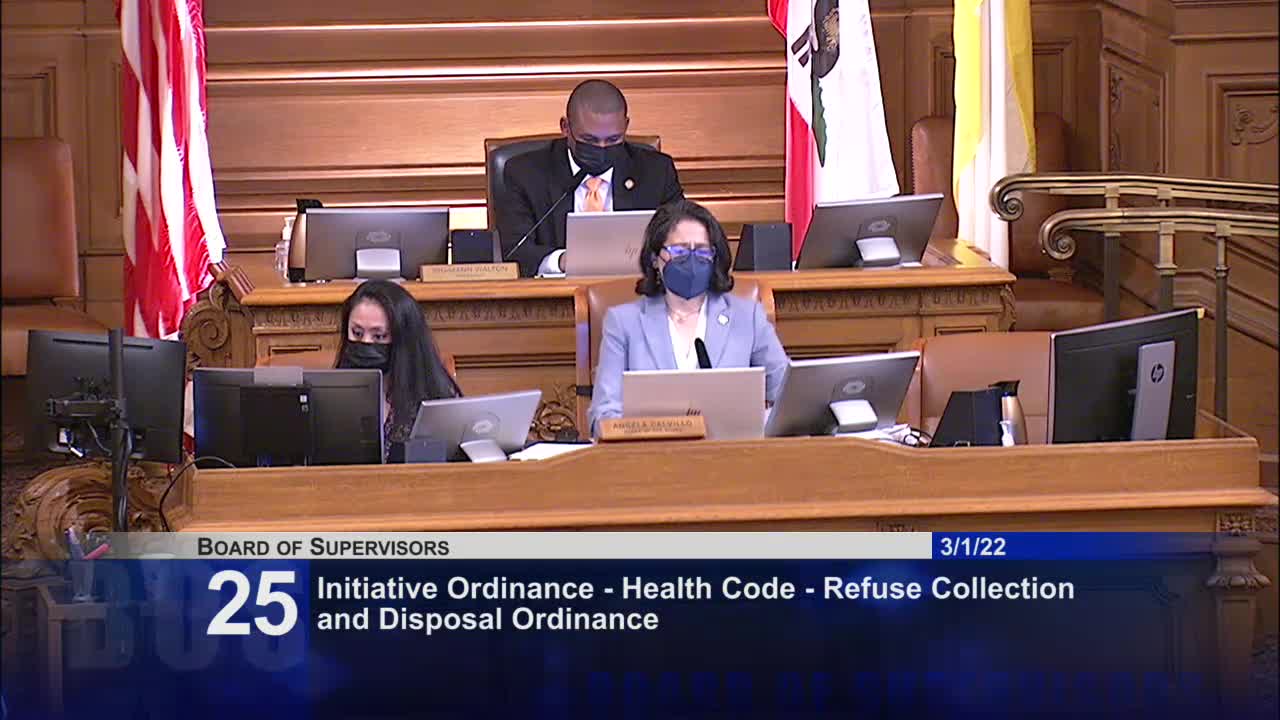
Competing measure tabled: A second, related ordinance (item 25) that had been placed on the agenda without the board’s earlier approval was moved to be tabled. The board voted 11–0 to table item 25 after Peskin said item 24 reflected a consensus among the mayor, the controller and the supervisors and that the competing language should not proceed in parallel. The motion to table passed unanimously.
Support and concerns: Supervisors who spoke in favor framed the measure as both a response to past misconduct and a structural fix that preserves options — including competitive procurement or municipalization — going forward. Opponents and some commenters warned the change would not, on its own, resolve wrongdoing and called for broader reforms; supporters said the ordinance is one piece of a larger program of accountability.
Outcome: Item 24 was ordered submitted to the voters by unanimous roll call; item 25 was tabled by unanimous roll call.
Speakers and attribution: Quotes and specific attributions in this article come from Supervisor Aaron Peskin (sponsor), Controller Ben Rosenfield (referenced in remarks), and other supervisors who participated in the roll-call and debate. Public commenters’ remarks on related topics were heard during earlier public comment but did not change the board’s unanimous votes.
Votes at a glance: On the motion to place item 24 on the ballot and table item 25 the roll call recorded 11 ayes, no nos.