Get Full Government Meeting Transcripts, Videos, & Alerts Forever!
Get email alerts on the Police Reform topic
No spam. Unsubscribe anytime.
Board holds update on DOJ reform work for SFPD; chief says most recommendations near completion, community presses for per‑capita disparity data
Summary
The Board of Supervisors on Jan. 26 held a public hearing on the implementation of the 2016 Department of Justice Collaborative Reform Initiative for the San Francisco Police Department. Chief William Scott said the department has completed or submitted large numbers of the 272 recommendations and predicted roughly 94% completion by spring, while supervisors and community members pressed for multiyear, per‑capita disparity data.
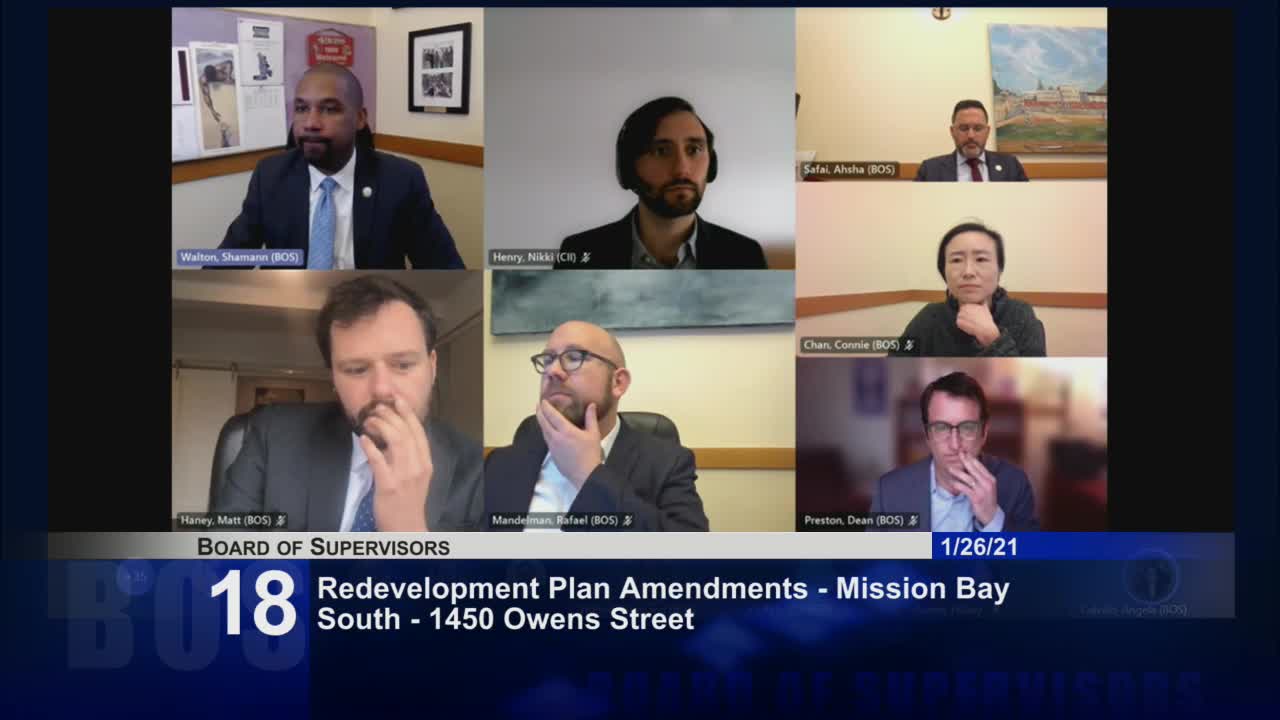
The Board of Supervisors convened as a committee of the whole on Jan. 26 for a public hearing on the status of implementing the United States Department of Justice recommendations for the San Francisco Police Department.
Supervisor Walton opened by asking how the department plans to address continuing racial disparities in stops, arrests and uses of force. "Why has the San Francisco Police Department not been able to address the racial disparity?" he asked. The question framed the hearing: community leaders and many supervisors sought per‑capita, multiyear data showing whether outcomes for Black residents are improving.
Chief William Scott said the reform work — begun in 2016 and continued under a memorandum with the California Department of Justice — is showing accelerating progress. "This collaborative reform…is based on technical assistance that's designed to assess, monitor, and assist our police department in collaboration with the community in implementing and sustainment of reforms that increase public trust," Scott told the board.
Status and timeline: Chief Scott and department staff said they have completed, submitted for review, or otherwise advanced a large share of the 272 recommendations. Chief Scott gave this summary: the department has "submitted completed a 93 of those" recommendations and reported a notable jump in recommendations found to be in "substantial compliance" by external reviewers during 2020. Scott said the department and the state's technical advisers have jointly clocked progress on hundreds of required compliance measures and that the SFPD expects roughly 94.48% of recommendations to be completed by the end of spring 2021.
Accountability and infrastructure: The chief described organizational changes put in place to deliver reforms, including restored assistant chief positions, new directors for strategic management, crime strategies and labor relations, and a new community engagement commander. He said commanders and officers had been assigned to lead five reform categories full time and said those "infrastructure" investments were driving faster completion.
Use of force and bias‑free policing: Commander Robert O'Sullivan (risk management) and Commander Daryl Fong (communications/community policing sponsor) walked the board through specific policy and training changes. O'Sullivan highlighted changes to firearm discharge review procedures and a new Field Tactics/Force Options unit (FTFO) that reviews officer‑involved shootings. Scott and O'Sullivan also pointed to lower totals in categories such as officer‑involved shootings and firearms reported in recent years.
But supervisors pushed for clearer, public metrics. "If you were to look at three years' worth of per‑capita data ... is it flat, is it rising, is it going down?" Supervisor Preston asked. The chief said trend lines for use of force are downward overall and pledged to provide additional per‑capita breakouts. Several supervisors said the board had repeatedly requested per‑capita, multiyear breakdowns and said the department had not made the data sufficiently available for public analysis.
Community and external experts: Scott identified outside partners helping to analyze disparity data and recommend reforms, including the Center for Policing Equity and Stanford researchers; he said those third‑party analyses have produced recommendations the department is implementing. Commander Fong described the department’s Community Policing Strategic Plan and a newly formed community liaison unit with members assigned to communities including African American, Asian Pacific Islander, Latinx and LGBTQ residents.
Public comment: Dozens of callers criticized the pace of reform and called for stronger oversight or for defunding the police. Felicia Jones, representing Wealth and Disparities in the Black Community, urged the board to require all remaining reforms be completed by the end of 2021 and demanded public, per‑capita disparity reporting. Dozens of other public commenters echoed that call and pressed for faster, enforceable outcomes.
Next oversight steps: Board members asked for follow‑up material, including year‑by‑year per‑capita charts for stops, arrests and uses of force by race; an update on the department’s remaining compliance measures; and a plan for sustaining reforms after external technical assistance subsides. The board voted to continue the hearing and set a follow‑up on May 25, 2021.
Direct quote: Chief Scott to the board: "We have submitted completed a 93 of those. So 79 are in progress. As I said, we have a 31 that have been found substantially compliance." The chief also told the board, "We're going to complete 272 recommendations. That's our commitment to the public and that's our commitment to ourselves."
Supervisors and community leaders closed the hearing pressing for publicly accessible, per‑capita data and tighter timelines to ensure that reforms translate into measurable reductions in racial disparities.