Get Full Government Meeting Transcripts, Videos, & Alerts Forever!
Get email alerts on the Mayor Succession topic
No spam. Unsubscribe anytime.
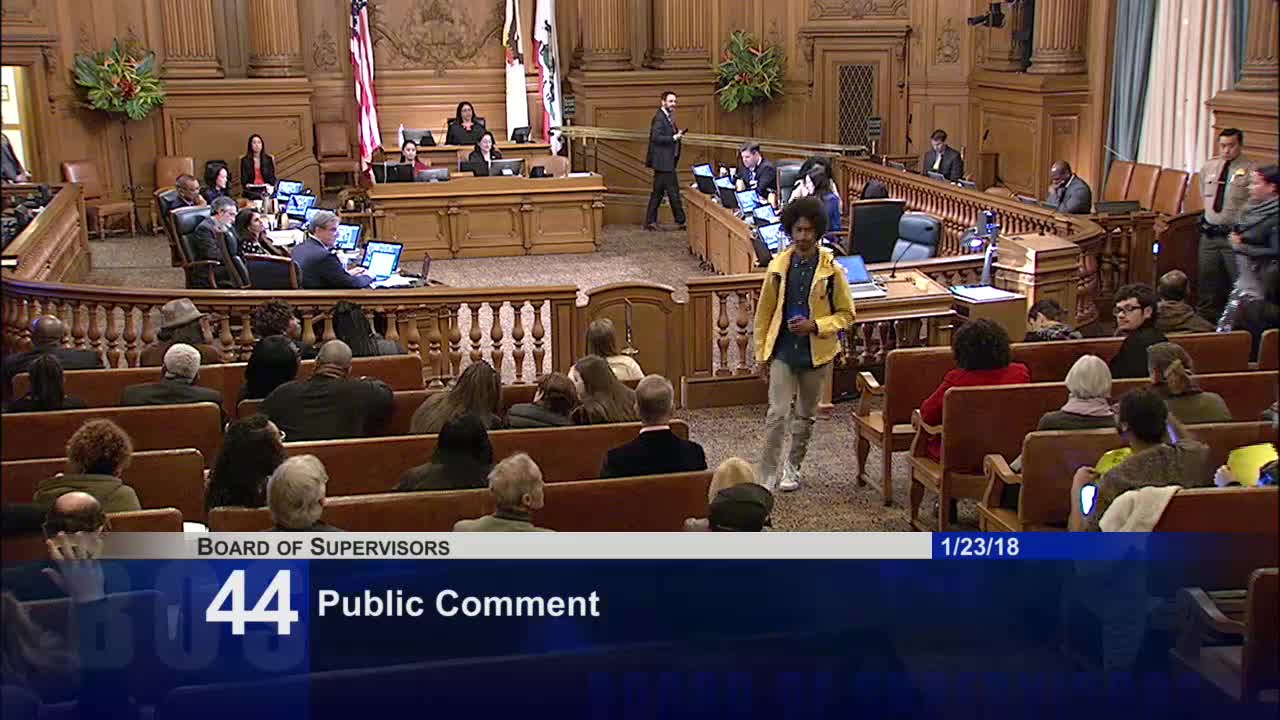
Board names Supervisor Mark Farrell successor mayor after contested hearing on interim appointment
Summary
After more than five hours of public comment and intra-board debate over separation of powers and fairness in the June mayoral contest, the San Francisco Board of Supervisors voted to appoint Supervisor Mark Farrell as successor mayor, 8–2. The board also adopted a procedural rule requiring nominees to be present and accept nominations in person.
The San Francisco Board of Supervisors appointed Supervisor Mark Farrell to serve as successor mayor to complete the remainder of Mayor Ed Lee’s term, voting 8–2 on a motion the board had approved in committee on Jan. 23, 2018.
The decision followed a daylong, often emotional public hearing and repeated debate among supervisors about whether the city should appoint a neutral, non‑candidate caretaker for the six‑month period before the June 5, 2018, special election — or allow the board president, Acting Mayor London Breed, to remain in both the legislative and executive roles through the election.
The question mattered to many speakers and supervisors because of competing principles: adherence to the city charter’s succession language, the perceived incumbency advantage if an officeholder runs while serving as mayor, and the racial and gender dynamics of replacing an African American woman who had been elected board president and was serving as acting mayor.
The board’s vote followed a multi‑step process the supervisors adopted earlier in the meeting. As amended by the board, the procedure required that any person nominated to be successor mayor must be physically present in the chamber and state “yes” to accept the nomination. Supervisor Aaron Peskin, who led the amendment, told colleagues: “Simply stated, anybody that is nominated here has to either be in this room and they have to say ‘yes, I accept’ or ‘no, I reject.’”
Supervisor Jane Kim and several members of the public had urged the board to name a neutral, non‑candidate interim mayor — listing experienced city managers and senior officials such as City Administrator Naomi Kelly as possible choices — to avoid the perception of an incumbency advantage. Supervisor Hillary Ronen, who had not endorsed a mayoral candidate, said the city needed “a radical change in direction” on housing and other issues and emphasized the need for an open, competitive June election.
But other supervisors and many public speakers argued that the charterized process and continuity of city operations favored keeping the acting mayor in place or appointing a qualified successor who could run the city on short notice. Several members of the African American community and long‑time San Francisco residents urged support for Breed, saying replacing her would send the wrong signal nationally and locally.
After two rounds of nominations in the committee of the whole, the board selected Farrell in committee by a 7–2 vote and then approved the recommendation in the full board 8–2. The tally on the final board roll call was 8 in favor and 2 opposed; the two supervisors recorded in opposition were Acting Mayor London Breed and Supervisor Malia Cohen.
Under the adopted procedure, the board’s selection in committee was forwarded as a recommendation to the full board, which then approved the motion to confirm Farrell as successor mayor. The board also approved motions earlier in the meeting directing the clerk to propose and the board to adopt a process for nominating and selecting a successor mayor; those motions passed with an amendment requiring in‑chamber acceptance by nominees.
Because a city judge must administer the oath of office, the chosen successor had not yet been sworn during the meeting; the swearing was to be scheduled following the board’s action.
Votes at a glance
This meeting included a long consent and adoption calendar. Items noted below were called and formally recorded on Jan. 23, 2018. Where roll‑call tallies were recorded on the public record, they are shown.
- Item 9 — Ordinance to reappropriate approximately $4,400,000 for lease and tenant improvement costs at 170 Ninth St. to support housing and the Department of Homelessness (fiscal year 2017–18): finally passed unanimously (11–0).
- Item 10 — Ordinance to appropriate approximately $11,000,000 to the Recreation and Park Department for Geneva Car Barn and Powerhouse capital improvements (FY2017–18): passed unanimously on first reading (11–0).
- Item 11 — Ordinance to appropriate $177,000,000 of proceeds from general obligation bonds for transportation and road improvements (FY2017–18): passed unanimously on first reading (11–0).
- Item 12 — Ordinance to appropriate approximately $77,000,000 from the 2012 Clean & Safe Neighborhood Parks G.O. Bond series 2018A to Recreation & Park (FY2017–18): passed unanimously on first reading (11–0).
- Item 13 — Ordinance to appropriate $300,000 from cigarette litter abatement fees to Public Works for street cleaning programs (FY2017–18): passed unanimously on first reading (11–0).
- Item 14 — Ordinance amending the Health Code to impose an annual $1,200 license fee for a cannabis smoking consumption permit: passed unanimously on first reading (11–0).
- Item 23 — Resolution authorizing the Real Estate Division to acquire property at 700–730 Stanyan St. from McDonald’s Corp. for $15,500,000 and place it under the Mayor’s Office of Housing and Community Development for affordable housing: adopted unanimously (11–0).
- Item 26 — Ordinance amending the Planning Code to revise the definition of gross floor area and related parking/loading provisions: passed unanimously on first reading (11–0).
- Item 32 — Ordinance to declare the second Monday in October to be Indigenous Peoples’ Day (first reading): the board considered a request for a one‑week continuance; the continuance failed by a roll call of 4 ayes and 7 nos and the ordinance passed first reading by roll call 10–1 (Supervisor Aaron Peskin recorded the lone no).
- Items 24 & 25 — Motions responding to the Civil Grand Jury reports (accelerating SF government performance; San Francisco Retirement System recommendations): adopted unanimously (11–0).
- Item 35–39 — Mission Rock / Mission Bay South redevelopment and financing matters were continued to Feb. 13, 2018, by unanimous board action (11–0) to permit further review and public comment.
- Item 45 — Resolution urging Congress and the Federal Communications Commission to uphold net neutrality and Title II protections: adopted unanimously (11–0).
- Items 46–48 — Motions directing the Clerk to propose a process for nominating and selecting a successor mayor (No. 46), to consider and approve a special process (No. 47), and to convene as a Committee of the Whole on Jan. 23 to take nominations and appoint a successor mayor (No. 48): the board adopted the set of motions and an amendment to require nominees to be physically present and accept nominations in the chamber. The amendment and the package were accepted by the board without recorded opposition and the committee process was implemented the same day.
What happens next
The board recorded its selection and the clerk prepared the formal appointment paperwork; the successor mayor must be sworn in by the appropriate judicial officer before exercising the full powers of the office. The chosen successor will serve until the winner of the special mayoral election on June 5, 2018, takes office.
Speakers quoted in this article are taken from the board record. Supervisor Aaron Peskin, explaining the in‑chamber acceptance requirement, said: “Simply stated, anybody that is nominated here has to either be in this room and they have to say ‘yes, I accept’ or ‘no, I reject.’” Supervisor Hillary Ronan, describing policy priorities that she said should guide voters in June, said the city needed “a radical change in direction.”