Get Full Government Meeting Transcripts, Videos, & Alerts Forever!
Get email alerts on the Minimum Wage topic
No spam. Unsubscribe anytime.
Mayor and supervisors unveil unified minimum-wage ballot measure; supervisors introduce transportation revenue proposals
Summary
On June 10 San Francisco's mayor and several supervisors announced a unified minimum-wage ballot measure for November 2014 to raise the city's minimum pay in steps to $15; supervisors also introduced proposals including a 2016 vehicle-license-fee measure and a transit-equity charter amendment.
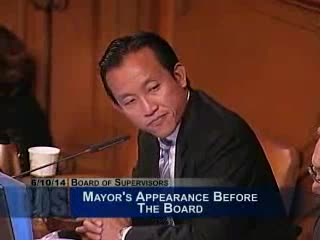
At a June 10 meeting of the San Francisco Board of Supervisors, Mayor Edwin M. Lee and supervisory supporters unveiled a unified minimum-wage measure for the November 2014 ballot and supervisors introduced separate transportation revenue proposals for future ballots.
Minimum wage ballot measure Supervisor Kim introduced a single, citywide ballot measure to raise San Francisco's minimum wage. The proposal, which sponsors said had broad backing from labor, nonprofits, business and the mayor's office, would raise the wage to $12.25 on May Day 2015 and then increase it by approximately $1 each year, reaching $15 in 2018. "It is a clean and clear measure," Supervisor Kim said on the floor, adding that supporters had reached a consensus on a single measure.
Mayor's remarks Mayor Lee appeared pursuant to the charter and used his allotted time to thank supervisors and community partners for reaching what he called a consensus on "a new minimum wage for San Francisco" that he said would help lower-wage workers and that he would participate in public discussions and enforcement planning.
Transportation measures and transit equity Supervisor Wiener announced that he and Mayor Lee, along with eight supervisors, were introducing a local vehicle-license-fee (VLF) measure for the November 2016 ballot to restore a VLF that had been sharply reduced in 2003. "We know that Muni has more than $2,000,000,000 in deferred maintenance," Wiener said, and the VLF would be part of a multi-year revenue roadmap that includes a general-obligation bond already on the November 2014 ballot.
Supervisor Avalos introduced a transit-equity charter amendment intended to require the Municipal Transportation Agency (MTA) to provide annual equity metrics and to help guide programming of new transit revenues. Avalos also introduced a measure to restore certain tenant protections for lease additions and roommate sign-ons.
Why it matters Sponsors said the minimum-wage measure would be the "strongest and most progressive" in the country and that restoring the VLF and placing equity metrics in the charter would provide sustainable funding for street resurfacing, pedestrian and bicycle safety, and Muni reliability.
Next steps The minimum-wage measure was introduced for the November 2014 ballot; sponsors said they planned unified campaigning. The VLF and transit-equity charter amendments were introduced for future ballot consideration and will require additional drafting, outreach and scheduling.