Get Full Government Meeting Transcripts, Videos, & Alerts Forever!
Get email alerts on the Taxes Education topic
No spam. Unsubscribe anytime.
Board urges state to close Proposition 13 commercial property‑tax loophole; educators, students press case
Summary
The Board of Supervisors adopted a resolution urging the California Legislature to close a loophole in Proposition 13 that allows many commercial properties to avoid reassessment on change of ownership; the meeting drew dozens of public speakers including teachers, students and advocates.
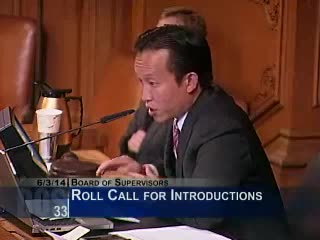
The San Francisco Board of Supervisors on Tuesday adopted a resolution urging the state legislature to close a commercial property‑tax loophole in Proposition 13, a change the board and dozens of public speakers said would restore revenue for public schools and local services.
Supervisor Cohen, who introduced the resolution, said closing the commercial loophole could generate "over $100,000,000 in revenue for San Francisco public services and education." The board’s action asked the Legislature to consider reassessment approaches beyond the narrow ownership‑change provisions currently in place. Several supervisors signed on as cosponsors and praised Assemblyman Tom Ammiano’s pending legislation as a step forward.
The item drew extensive public comment: teachers, school librarians, college students, PTA members and elected school‑board officials urged action to increase school funding. Former Supervisor Carol Ruth Silver told the board that major commercial properties — she cited Disneyland as an example in her remarks — pay much lower property taxes per square foot than many homeowners, calling that outcome "not fair. That is wrong." San Francisco Unified School District Commissioner Matt Haney and many teachers and students described classroom needs, counselor shortages and the educational impact of long‑term funding shortfalls.
After hours of public comment and board discussion, the board approved the resolution by roll call. The vote was recorded as 11 ayes; supervisors stressed the measure urges state action rather than changing state law directly.