Get Full Government Meeting Transcripts, Videos, & Alerts Forever!
Get email alerts on the Public Health topic
No spam. Unsubscribe anytime.
Board votes to ban e-cigarette use where smoking is banned, require tobacco permits for sales
Summary
The Board of Supervisors passed an ordinance to amend the health code to prohibit electronic cigarettes where smoking is already banned, require a tobacco permit for e-cigarette sales and ban sales where tobacco sales are prohibited.
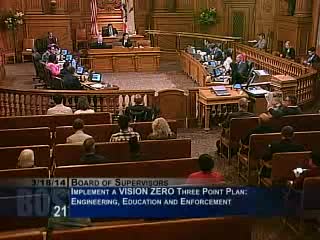
The San Francisco Board of Supervisors passed an ordinance in first reading March 18 that would treat electronic cigarettes (e-cigarettes) similarly to conventional tobacco products in places where smoking is prohibited and would require retailers to obtain a tobacco permit to sell e-cigarettes.
Supervisor John Avalos and Supervisor Mark Farrell joined sponsor Supervisor Jane Kim in urging the measure. Kim said recent studies show rapidly increasing youth use and that flavored e-cigarette products are marketed in ways that appeal to minors; she described the proposal as a public-health measure to protect young people and preserve smoke-free social norms. "Nicotine is a highly addicting stimulant that really impacts people who smoke," said Dr. Thomas Aragon, San Francisco's health officer, who urged the board to regulate e-cigarettes to avoid reversing decades of public-health gains.
What the ordinance does: Under the proposed change to the health code, use of e-cigarettes would be prohibited in the same locations where smoking is already banned. The ordinance would also: - Require a tobacco permit for retail sale of electronic cigarettes. - Prohibit sale of e-cigarettes in locations where sale of tobacco products is prohibited.
Support and context: Supervisor Kim said the measure had unanimous support in the Rules Committee and the Youth Commission; the small business commission also endorsed the ordinance. Kim and public-health witnesses said local action was needed while national standards remain unsettled, and they noted other cities and jurisdictions have adopted similar limits.
Board action: The board took the first reading as part of the meeting's calendar and passed the ordinance on first reading without recorded dissents. The item will return for further readings and final passage according to the city's legislative schedule.
Ending: Sponsor offices said the intent is to coordinate with national public-health groups and other large cities to align policy approaches while the local ordinance protects indoor public spaces and youth from exposure and potential nicotine initiation.