Get Full Government Meeting Transcripts, Videos, & Alerts Forever!
Get email alerts on the Land Use Masonic topic
No spam. Unsubscribe anytime.
Board affirms final EIR for Masonic Center renovation after contested Nob Hill hearing
Summary
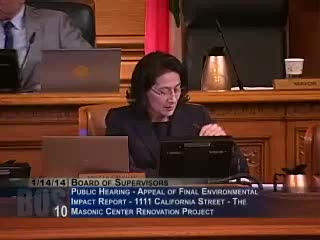
After a multi-year dispute and a daylong hearing with neighborhood appellants and neighborhood organizations on opposing sides, the Board of Supervisors upheld the Planning Commission’s certification of the final EIR for the Masonic Center renovation project and passed the motion to affirm the EIR.
The San Francisco Board of Supervisors on Jan. 14 voted to affirm the Planning Commission’s certification of the final environmental impact report (EIR) for the proposed renovation of the Masonic Center at 1111 California Street, closing a six‑year dispute between neighbors, the project sponsor and neighborhood organizations.
The hearing drew detailed legal and technical arguments from both sides. Appellants — including homeowner Barrett Mu, the Coalition for San Francisco Neighborhoods and Nob Hill Neighbors — argued the EIR was inaccurate and incomplete because it did not properly analyze land‑use constraints imposed by the Nob Hill Special Use District, the scope of nonconforming uses, parking and traffic impacts, and whether Planning Code section 182 could lawfully be used to allow an intensification of entertainment use on Nob Hill. Appellants also raised concerns about permitting and a pending liquor-license application.
Supporting the EIR were the project sponsor (the California Masonic Memorial Temple and Live Nation), the Nob Hill Association and the Nob Hill Coalition, which said a settlement reached in 2013 limited the number and type of events and included neighborhood conditions. Planning Department staff told the board the EIR “sufficiently analyzes all CEQA issues and is adequate, accurate and objective,” and that appellants had not presented substantial evidence to show otherwise.
The board’s action: President David Chiu moved to affirm the Planning Commission certification of the EIR, Supervisor Mark Farrell seconded, and the motion passed. The board’s approval affirmed the Planning Commission’s prior findings and effectively allowed the project to proceed under the existing approvals; supervisors also tabled related items that would have reversed certification or directed findings.
What was at stake: Appellants warned the board that accepting the EIR and the planning interpretations it described would amount to a precedent allowing an “other entertainment” use in the Nob Hill Special Use District through an interpretation of general code provisions rather than by an SUD amendment. Supporters said the project has been the subject of litigation, a negotiated settlement with neighborhood groups and a suite of conditions that limit impacts — including an overall cap on large live entertainment events and restrictions on alcohol service.
Project details discussed publicly: the EIR analyzed an increase in yearly large events from 230 to 315, and an increase in maximum event capacity from approximately 3,166 to 3,300 (an increase of about 134 patrons at a sold‑out event). The Planning Commission’s conditional‑use approval adopted limits described in the settlement, including a cap on music events and a reduced number of food-and-beverage concession locations.
Next steps: The board’s affirmation of the EIR removes a major procedural barrier for the sponsor but does not by itself alter the negotiated conditions or approvals the project requires; any further zoning or permit approvals would follow the city’s standard processes. Several neighborhood and city representatives said they expected continued monitoring and enforcement of the conditions of approval.
Ending: The hearing closed after public testimony from opponents and supporters, declarations from long‑time planning staff and an extended legal record. The board’s action was procedural — affirming the EIR’s adequacy under CEQA — and leaves substantive conditional‑use conditions and enforcement measures as the primary levers for neighborhood protections going forward.