Get Full Government Meeting Transcripts, Videos, & Alerts Forever!
Get email alerts on the Fair Chance Act topic
No spam. Unsubscribe anytime.
Board passes Fair Chance Act on first reading to limit early use of conviction history in hiring and housing
Summary
The San Francisco Board of Supervisors passed the Fair Chance Act on first reading, delaying employers' and housing providers' inquiry into conviction or arrest history until after an initial interview or conditional offer and setting procedural limits, including a seven‑year lookback in some cases.
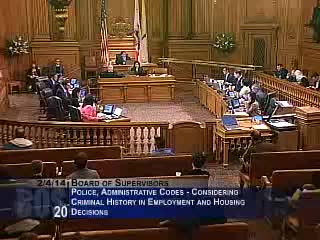
The San Francisco Board of Supervisors passed the Fair Chance Act on its first reading without objection on Tuesday, moving forward an ordinance that limits when employers, housing providers and certain contractors may consider an applicant’s arrest or conviction history.
Supporters said the ordinance is designed to let applicants be judged on qualifications first while preserving employers’ ability to vet background information later. “This legislation is not designed to give individuals a preference. Rather, it’s to ensure that they are judged on qualifications, not their previous actions,” Supervisor Malia Cohen said during the board discussion.
The ordinance delays any inquiry into conviction or arrest records until after a live initial interview or, in some cases, a conditional offer of employment or housing. Sponsors described several boundaries the law would set: it removes the conviction-history box from initial applications, establishes consistent procedures for evaluating records, and includes a look-back limitation described in the ordinance’s terms (sponsors referenced a seven‑year lookback for certain inquiries). The measure also explicitly covers some below‑market‑rate housing and city contractors as drafted.
Backers framed the measure as a public‑safety and reentry policy designed to reduce recidivism by improving access to jobs and housing. “Access to housing and employment opportunities are key components to preventing recidivism,” Cohen said, adding that San Francisco’s offices had worked with civil‑rights groups, housing providers, law enforcement and business representatives in drafting the ordinance.
Board members from across the chamber voiced support. Supervisor Jane Kim said the act puts faces behind the policy and recounted local stories of residents who lost opportunities because of distant or minor records. Supervisor Eric Mar, Supervisor Scott Wiener and others offered endorsements during the floor remarks.
The ordinance’s supporters listed community organizations and partners that helped craft and back the legislation, including All of Us or None, Legal Services for Prisoners with Children, the Lawyers’ Committee for Civil Rights, the National Employment Law Project, Jobs With Justice, the San Francisco Chamber of Commerce and the San Francisco Small Business Commission. City departments consulted included the Department of Human Resources, the Office of Labor Standards Compliance and the Office of Contract Administration, according to sponsors.
Because the board adopted the ordinance on first reading, it will return for a second reading and final passage at a later meeting under the city’s legislative schedule. The text passed on first reading did not include an effective date or detailed implementation schedule; those items and any administrative rules would follow in subsequent steps.