Get Full Government Meeting Transcripts, Videos, & Alerts Forever!
Get email alerts on the Housing Condo Conversion topic
No spam. Unsubscribe anytime.
Board upholds condo-conversion fee in appeal by disabled owner at 489 Sanchez Street
Summary
A majority of the San Francisco Board of Supervisors voted 9-2 to uphold the city's condominium-conversion impact fee for a three-unit building at 489 Sanchez Street, denying an appeal by an owner who said she could not afford the $8,000-per-unit charge.
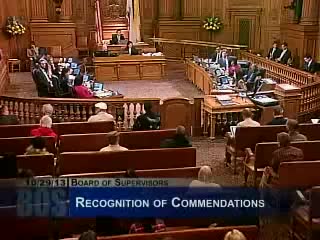
A majority of the San Francisco Board of Supervisors voted 9-2 on Oct. 2013 to uphold the city's condominium-conversion impact fee for a three-unit building at 489 Sanchez Street, rejecting an appeal by one of the unit owners who asked the board to waive the $8,000-per-unit charge.
The appellant, Christina Carrasquillo, told the board she is quadriplegic, lives primarily on Social Security disability income and part-time work, and that she bought her unit after three years of searching because it was accessible on the sidewalk level. She said asking her to pay the fee would force her to give up a home she said she could not replace.
The board's vote followed legal briefing and testimony from city attorneys, the mayor's Office of Housing and the city surveyor. Deputy City Attorney John Givner and city staff described the narrow legal standard for this appeal: the board may reduce or waive the fee only if it finds there is no relationship, or nexus, between the impact of condominium conversions and the amount of the fee.
Why it matters: the city adopted an expedited condominium-conversion ordinance earlier this year that established a per-unit impact fee, based on a consultant's nexus study. The ordinance includes limited reductions tied to prior lottery participation and a deferral option that postpones payment until final map approval; it does not grant hardship waivers based solely on personal or financial hardship.
What happened at the hearing
The appellant described how she used a modest legal settlement as her down payment, how she relies on in-home support services, and why she cannot work enough to replace lost benefits if her earnings rise. She said her unit is one of the few accessible units in the city and that she would effectively lose housing stability if forced to pay.
Co-owners and neighbors testified in support of waiving or reducing the fee, describing the difficulty of finding accessible housing and worrying that the application of the fee would harm a resident with severe disability.
City witnesses and analysts said the fee was supported by the June nexus study and that the building had been granted tentative map approval; they said DPW and the surveyor's office can defer collection for a short period (the city estimated three months to a year, depending on final map processing). The mayor's Office of Housing said it had no program that could pay the fee on the owner's behalf.
Board action and votes
- A motion by Supervisor Scott Wiener to waive the fee failed on a roll-call vote (2 ayes, 9 noes). Recorded aye votes were Supervisors Scott Wiener and Supervisor Mark Farrell; recorded no votes were Supervisors Jane Kim, David Chiu (President Chu), Malia Cohen, Eric Mar, Norman Yee, John Avalos, Christina (Breed) and London (Tang) (transcript roll call as recorded).
- After procedural maneuvering, a second motion by Supervisor Jane Kim to affirm the application of the condominium-conversion fee (approving the denial of the appeal) passed 9-2. Recorded yes votes: Yi, Avalos, Breed, Campos, Chu, Cohen, Kim, Mar and Tang. No: Wiener and Farrell.
The board directed the clerk and city counsel to prepare findings consistent with the vote.
Context and clarifications
- Fee amounts and reductions: the ordinance set a baseline impact fee of $20,000 per unit based on the nexus study; buildings that participated in a prior lottery can receive a reduction. For 489 Sanchez, the applicable fee was reduced to $8,000 per unit under the ordinance's reduction formula, making the building's total fee $24,000.
- Deferral: the ordinance allows DPW to defer collection of the fee until final map approval; city staff estimated deferrals measured in months (three months to about a year), not indefinite deferrals tied to sale.
- Legal standard: the board may only waive, reduce or adjust the fee if it finds there is not a reasonable relationship (nexus) between the conversion impact and the fee amount. The city's deputy city attorney and the mayor's Office of Housing said the appellant did not present evidence to rebut the nexus analysis.
What the board members said
Some supervisors expressed sympathy for the appellant and urged the mayor's Office of Housing to study ways to support very low-income homeowners on fixed incomes or with disabilities. Others said the board must uphold the narrow legal standard in the ordinance and avoid setting a precedent that could undermine the city's affordable-housing mitigation program.
What happens next
The board recorded the decision and asked staff to prepare formal findings. The appellant may pursue other administrative or legislative options; the mayor's Office of Housing said it could explore programs in future budget cycles but had no immediate funds to pay the fee.
Ending note
The case underlined tensions in San Francisco between programs meant to mitigate the housing effects of condominium conversions and the city's obligation to protect vulnerable homeowners. Several supervisors said the hearing suggested the need for a separate policy discussion about targeted assistance for homeowners on fixed incomes or with disabilities.