Get Full Government Meeting Transcripts, Videos, & Alerts Forever!
Get email alerts on the Clean Energy topic
No spam. Unsubscribe anytime.
Mayor Lee and supervisors spar over Clean Power SF after PUC rejects proposed rates
Summary
Mayor Edwin Lee defended the San Francisco Public Utilities Commission’s decision this week to reject proposed Community Choice Aggregation rates, citing concerns about elevated costs and heavy reliance on renewable energy certificates rather than locally sourced bundled renewables.
Mayor Edwin Lee defended the San Francisco Public Utilities Commission’s decision this week to reject proposed rates for the City’s Community Choice Aggregation program, saying the commission was fulfilling its charter duty to protect ratepayers.
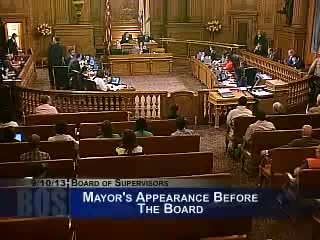
The exchange came during question time at the San Francisco Board of Supervisors on Tuesday, when multiple supervisors pressed the mayor about what his office is doing to implement the Clean Power SF policy the Board approved last year.
The disagreement centers on how much of the electricity mix the program would purchase as directly bundled renewable power versus renewable energy certificates, known as RECs. Lee told the Board that the package presented to the commission included only 25 percent “true renewable energy” and relied on 75 percent RECs, a change he said degraded the program’s environmental benefit and raised costs for local customers.
"The Public Utilities Commission's primary charter mandated duties are to protect the rate payers," Mayor Edwin Lee said. "After getting lobbied very hard by some advocates and members of this board to approve a program, the commissioners ultimately decided that the proposed rates for the Community Choice Aggregation weren't a deal for San Francisco."
Why it matters: the structure and rates of Clean Power SF determine both the near‑term cost to residential customers and the program’s ability to produce local renewable energy and jobs. The mayor and some supervisors said they share climate goals but disagreed on whether the proposed contract with Shell Energy North America and the program’s rate ceilings deliver those local benefits.
Supervisor Marr opened the questioning by noting the Board had adopted Clean Power SF and asked whether the mayor’s office was stalling implementation. "This program was adopted by the Board of Supervisors," Marr said. "However, there are some allegations that your office is stalling its implementation. What specifically are you doing as the City's head executive to implement our Clean Power SF policy in a timely fashion?"
Lee replied that the version of CCA presented to the commission had shifted away from the deals the Board had intended. He said earlier proposals included a much higher percentage of bundled, firmed and shaped renewable energy and local generation investments, whereas the later contract staff negotiated relied heavily on tradable certificates.
"By the time those RECs reach our Community Choice Aggregation Program, their environmental benefits are far removed," Lee said. "We're not even sure whether we can achieve any greenhouse gas savings from RECs. We'd be dependent upon Shell Oil to help us reach our city's climate goals."
Several supervisors pressed Lee on alternatives. Supervisor Breed asked whether the mayor would work with the Board to redesign a clean power program the mayor could support; Lee said he would, and emphasized energy efficiency and local renewable generation as priorities. He highlighted city programs such as GoSolar and building energy performance work as parts of a broader strategy.
Supervisor Campos and others argued the commission’s vote appeared to contradict Board policy and asked whether the mayor’s office would push to implement the Board‑authorized plan. Lee said the commission — an independent charter body — was authorized to set rates and that he supported the commission’s decision in this instance because of the program’s cost and the limited local environmental benefit of the proposed contract.
Lee also said he supports pursuing state legislation to allow an opt‑in structure, rather than the current state requirement that CCAs be opt‑out programs. "I would be eager to work with you to make this happen at the state legislature as soon as possible," he told supervisors.
Several outside commenters in public comment backed the Board’s Clean Power SF goals and pushed back on the mayor’s framing. One speaker emphasized that the short‑term contract in question would represent a small portion of the full program and said program rates were a ceiling, not the rates customers would necessarily pay.
The exchange did not produce a formal vote or new directive at the meeting. Supervisors and the mayor signaled willingness to continue discussions on program structure, local job creation and state rules that govern CCA participation.
Looking ahead: the mayor said his office will work with the Board and flagged energy efficiency and building‑based renewables as priority paths. Supervisors said they intend to pursue further oversight and, if necessary, legislative avenues to press for a CCA that aligns with the Board’s policy expectations.