Get Full Government Meeting Transcripts, Videos, & Alerts Forever!
Get email alerts on the Reproductive Health Access topic
No spam. Unsubscribe anytime.
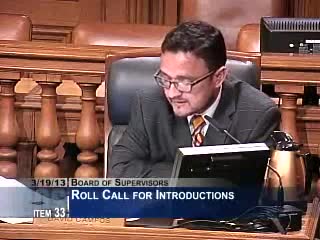
Supervisor Campos introduces 25-foot buffer-zone ordinance to protect access to reproductive health clinics after year of reports of harassment
Summary
Supervisor David Campos introduced an ordinance to create a 25-foot buffer zone around freestanding reproductive health clinics to protect patients and staff from intimidation and harassment; supporters said the measure balances free-speech rights and public-safety needs while opponents that addressed the board said their presence was peaceful.
Supervisor David Campos on Tuesday introduced an ordinance the board said is intended to protect patients and staff at freestanding reproductive health clinics by creating a 25-foot buffer zone around clinic entrances and amending the board's 1993 "bubble" ordinance.
The measure, Campos said, "creates a buffer zone that provides protection at 25 radius within the entrance of the clinic." He said the ordinance is narrowly tailored to protect patients' ability to pass without obstruction and to avoid unwanted communication while preserving protesters' ability to speak outside the buffer zone.
Why it matters: Supervisor Campos framed the proposal as a response to more than a year of reports of harassment at a Planned Parenthood clinic in his district and points to court decisions that have upheld narrowly tailored buffer zones.
Key context and arguments - Campos said the city's previous protections — including the 1993 access-to-healthcare-facilities "bubble" ordinance and a white-zone ordinance passed last year — were insufficient to prevent demonstrators from finding loopholes. "We have a last-resort attempt to provide some protection to the patients who want to access this clinic," he said. - Campos cited court precedent and legal analysis during his remarks, noting the U.S. Supreme Court has recognized an interest in protecting patients' rights to avoid unwanted communication and unobstructed passage; he also referenced a First Circuit decision (Boston) upholding a 35-foot buffer zone and a Ninth Circuit decision in 2011 upholding a similar Oakland ordinance. Campos said San Francisco's proposed 25-foot radius is "more modest" than some comparators.
Public testimony at the meeting reflected sharply contrasting accounts of the sidewalk outside Planned Parenthood. Dr. Konopalski (recorded in the transcript as "doctor Konopaski") told the board that the sidewalk had been "very peaceful" and that demonstrators pray and hand out a statement of peace; he said protesters were "asked to fill out" a pledge to be peaceful and that they were there to help women. By contrast, Beverly Upton of the San Francisco Domestic Violence Consortium described prolonged intimidation and harassment she said she had witnessed over nearly 20 years and called it "a public safety issue." Nancy Rock of Democratic Women in Action described Campos's legislation as "a wonderful, respectful, and understanding piece of legislation."
Board action and next steps: Campos introduced the ordinance for consideration; no vote on the ordinance was recorded during Tuesday's session. Campos said the measure would apply to freestanding clinics because they are often the most vulnerable to intimidation on account of facility layout and short patient stays. The board did not adopt the ordinance on the day it was introduced; further committee hearings or readings were implied as the next steps.
Ending: Campos said he looked forward to further discussion and thanked Planned Parenthood staff and patients for their patience. "Government has a responsibility to protect them," he said, arguing the city should continue to lead on protecting civil rights while balancing First Amendment interests.