Get Full Government Meeting Transcripts, Videos, & Alerts Forever!
Get email alerts on the Transit Funding topic
No spam. Unsubscribe anytime.
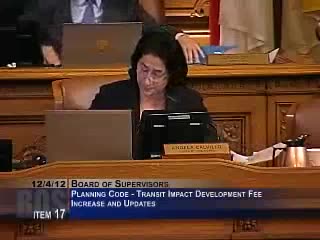
Board restores blanket nonprofit exemption to transit impact fee after debate over Muni funding
Summary
The Board of Supervisors voted to reinstate a blanket nonprofit exemption to the Transit Impact Development Fee (TIDF) after a prolonged debate over whether large nonprofits should pay fees to support Muni maintenance and expansion.
Supervisor Scott Wiener presented an ordinance to renew and update San Francisco's Transit Impact Development Fee (TIDF), removing a blanket exemption for nonprofit developments and arguing large nonprofit generators should pay their share to support Muni. Wiener said the city faces severe deferred maintenance and operating shortfalls and that exempting large institutions meant Muni was subsidizing major trip generators.
The debate centered on whether a blanket exemption for all nonprofits should remain. Supervisor Ellsburn offered an amendment to restore the existing blanket nonprofit exemption so nonprofits would continue to be exempt from the TIDF. Supporters of the amendment argued the change represented a substantive policy shift that should be handled through the broader Transportation Sustainability Program (TSP) and that small and mid‑sized nonprofits could be harmed by new fees.
Proponents of removing the blanket exemption, led by Supervisor Wiener and supported by transit advocates and MTA staff, said the TIDF update followed a nexus study and several years of MTA planning and that it was inappropriate for large institutions with significant traffic impacts (hospitals, universities, large private schools) to remain universally exempt. Joel Ramos of the MTA Board of Directors described Muni's system failures and urged the board to adopt the revision, saying the exemption for large institutions made it harder to fund needed repairs and expansions.
Supervisor Ellsburn said he had worked with faith‑based and smaller private schools in his district and that many relied on private fundraising; he argued reinstating the nonprofit exemption was necessary to avoid imposing fees that could jeopardize those projects. Other supervisors said they favored a higher square‑footage exemption (holding smaller nonprofits harmless) but not a permanent blanket exemption for major trip generators.
After debate the board first voted to adopt Supervisor Ellsburn's amendment to reinstate the blanket nonprofit exemption (result: 9 ayes, 2 noes). The ordinance, as amended, then passed on first reading (result: 11 ayes). The board also accepted technical amendments proposed by Supervisor Wiener prior to the amendment vote.
Why it matters: Muni faces long‑term maintenance and operating deficits that affect daily service. The board's decision preserves a broad nonprofit exemption for TIDF, maintaining the status quo for many large nonprofit projects and delaying a funding source that MTA and some supervisors argued would help address Muni's structural shortfall.
Next steps: The ordinance passed on first reading as amended and will return for a second reading consistent with the city's legislative process. Supervisors and MTA staff said they planned to pursue the TSP environmental review and further discussions with nonprofit stakeholders over the coming year.