Get Full Government Meeting Transcripts, Videos, & Alerts Forever!
Get email alerts on the Land Use 8 Washington topic
No spam. Unsubscribe anytime.
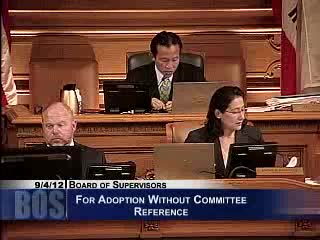
Board declines to repeal 8 Washington zoning change; referendum headed to voters
Summary
After a full public hearing with thousands of petition signatures and hours of testimony, the Board of Supervisors voted 8–3 not to repeal its earlier zoning decision on the 8 Washington Street project; opponents collected 31,297 signatures and the measure will go to the ballot.
The San Francisco Board of Supervisors voted 8–3 on Tuesday not to repeal an ordinance raising height and bulk limits for the 8 Washington Street project, meaning the referendum petition collected by opponents will proceed to a public ballot.
City Attorney staff deputy John Givner told the board that a "yes" vote would repeal the ordinance while a "no" vote would leave it intact and require the Department of Elections to place the ordinance on the ballot. "A yes vote, when this question is called, will be a vote to repeal. A no vote is a vote not to repeal the ordinance and to instead send the ordinance to the voters for their consideration," Givner said.
The vote follows a lengthy public hearing in which speakers for and against the project appeared. Supporters, including architects, neighborhood associations and construction-trade representatives, said the development would replace a fenced parking lot with mixed-use buildings, public open space and funds for affordable housing. Opponents, including a coalition that gathered 31,297 petition signatures in 29 days, said the project would create a “wall” on the waterfront and set a precedent for taller development.
Why it matters: The vote keeps the zoning approval in place but guarantees voters a final say. Campaigns for and against the project are likely to be extensive; the board president warned that printing the referendum materials will increase election costs. The board was told the signature books delivered to the Department of Elections filled dozens of boxes and that adding the material to the voter handbook could add roughly $1.5–$2 million to election printing costs.
What the board did: After hours of public testimony and debate, the roll call returned three ayes and eight noes; the clerk will notify the Department of Elections so the matter can be placed on the ballot at the next appropriate election. The vote tally announced by the clerk was: Supervisor Avalos — aye; Supervisor Campos — aye; President Chu — aye; 3 ayes, 8 noes (vote detail: not all individual roll-call pronunciations were unambiguous in the record). The ordinance therefore was not repealed.
Public testimony: Thousands of signatures and dozens of speakers were presented. Supporters said the project had undergone seven years of review, would deliver $11 million in fees for affordable housing, create parks and pedestrian connections and provide union construction jobs. Opponents stressed view corridors, waterfront character, the long-standing 40-foot/84-foot waterfront limits and skepticism about how petition signatures were solicited. Several speakers described signature-gathering tactics and said petition signers were not always informed of the petition’s detailed text.
Next steps: Because the board declined to repeal the ordinance, the Department of Elections will be notified to place the measure on the ballot. If a majority of voters reject the ordinance at the election, the board’s zoning change would be overturned. If voters sustain the ordinance, the project could proceed under the existing approvals.
Votes at a glance: On the question of repeal, the clerk announced the final vote as 3 ayes, 8 noes; because the clerk’s roll-call announcements in the record include minor transcription inconsistencies, the official minutes and the clerk’s certification will serve as the authoritative record for individual votes.