Get Full Government Meeting Transcripts, Videos, & Alerts Forever!
Get email alerts on the Housing topic
No spam. Unsubscribe anytime.
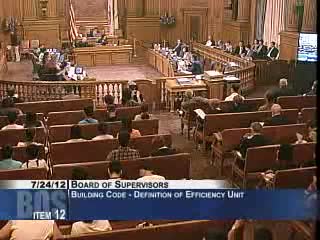
Board submits Housing Trust Fund charter amendment to November ballot after board vote
Summary
The San Francisco Board of Supervisors voted to submit a charter amendment establishing a Housing Trust Fund and Housing Production Incentive Act to the November ballot after debate about scope and funding; vote was 8–2.
The San Francisco Board of Supervisors voted to submit a charter amendment creating a San Francisco Housing Trust Fund and Housing Production Incentive Act to the November ballot, following extended debate over scope, funding levels and grandfathering provisions.
Supervisors who spoke said the proposal is intended to create a permanent stream of funding for affordable housing in the city and to pair public investment with incentives for private-sector housing production. Supporters described the measure as a compromise reached through a multi-stakeholder process that included the mayor’s office, affordable housing advocates and developers.
Supervisor Scott Wiener, a cosponsor, said the measure would recapture funding lost with the dissolution of redevelopment and create a sustainable funding stream “for several decades” to support affordable housing. He also thanked staff and advocates involved in the negotiation.
Supervisor Jane Kim, another cosponsor, said the measure responds to a long history of failed housing measures since the late 1990s and emphasized that it would fund both rental affordable units and homeownership loans for low-income households. Kim said the charter language includes a homeownership loan program for households “who make a 20% of AMI and below” and — by amendment from Supervisor Farrell, who was not present — extends eligibility to first responders.
President David Chiu said stakeholders agreed to an implementation review process outside the charter: legislation to require a comprehensive report and evaluation every five years for the 30-year duration of the charter commitments, if voters approve the amendment. Several supervisors expressed that the amendment was a pragmatic compromise: not everything any single faction wanted, but a way to put a permanent revenue source before voters.
Supervisor David Campos and others urged continuing work on scale and funding levels. Campos noted the proposal would likely yield initial annual amounts in the low tens of millions — for example, “perhaps $12,000,000 going to affordable housing” and smaller allocations to other program elements in year one — and questioned whether that is sufficient to address citywide need. Campos said he would vote for the measure while warning it may not fully match the scale of the housing affordability crisis.
After debate, the board took a roll-call vote and recorded 8 ayes and 2 no votes. The charter amendment will be placed on the November ballot for voters to decide.
Supporters and opponents said they will continue outreach to explain the measure to voters and to refine implementation details if the charter amendment passes.
(Details on program elements in the amendment include a housing stabilization program listed in the charter amendment text with $15,000,000 in funding for household repairs and energy upgrades, a proposed down-payment assistance loan pool described in debate as “perhaps $3,000,000,” and an explicit inclusion of first responders in the homeownership loan eligibility via an amendment noted during the meeting.)