Get Full Government Meeting Transcripts, Videos, & Alerts Forever!
Get email alerts on the Civil Rights Surveillance Policy topic
No spam. Unsubscribe anytime.
Supervisors approve ordinance restricting city participation in federal counterterrorism surveillance
Summary
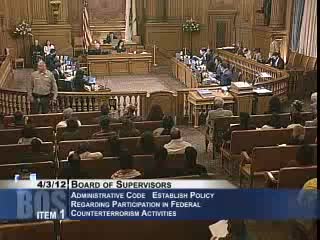
The San Francisco Board of Supervisors on April 3 passed an ordinance amending the Administrative Code to bar city-funded employees from participating in federal intelligence-gathering activities aimed at people based solely on race, religion or national origin. The vote was 6–5.
The San Francisco Board of Supervisors on Tuesday passed an ordinance amending the city Administrative Code to set a citywide policy limiting local participation in federal counterterrorism activities that target people based on race, religion or national origin.
The ordinance, introduced by Supervisor Kim, states that city and county employees should not engage in intelligence gathering that targets Muslim, Arab, South Asian or other communities “purely based on their race and religious belief and not any reasonable suspicion of criminal activity or terrorist activity.” Supporters told the board the policy is intended to protect civil rights and restore trust between affected communities and law enforcement.
Supervisor Kim framed the ordinance as the product of several years of work with community leaders and city commissions, saying the language is not reactionary but the result of three years of drafting with the Human Rights Commission and Police Commission. “This ordinance restates that local privacy laws and [the] state constitution must be respected in any surveillance work that SFPD does,” Kim said. She cited news reports and editorials suggesting federal intelligence activity in San Francisco had targeted religious leaders and community members.
Supporters including Supervisor Avalos and Supervisor Campos emphasized civilian oversight and long-term protections beyond any single police chief. Avalos thanked community activists for pressing the issue; Campos noted the city has previously codified policy-based stances such as sanctuary protections and said civil-rights safeguards should be embedded in local law.
Opponents argued the measure risked duplicating or improperly intruding on police-department policy-making authority and the oversight role of the Police Commission. Several supervisors voted against the ordinance during the roll call.
Roll call on the ordinance recorded: Ellsberg — No; Farrell — No; Kim — Aye; Mar — Aye; Maher — Aye; Olague — Aye; Weiner — No; Avalos — Aye; Campos — Aye; President Chu — Aye; Chu — No; Cohen — No. The clerk announced the final tally as 6 ayes and 5 noes, and the ordinance was approved.
The ordinance as passed is a city policy statement directing that city-funded employees not target people for surveillance solely because of their race, religion or national origin. The ordinance does not list enforcement mechanics in the text debated at the board and supporters said the Police Commission and department general orders would inform operational details.
The board’s action concludes a multi-year local debate and follows media reports and community testimony alleging federal intelligence activities in the region. The ordinance supporters said it seeks to codify protections for civil rights and ensure future city employees and contractors comply with the stated policy.
The city clerk’s office will publish the ordinance text in full; supporters and opponents noted further implementation and any operational questions will involve SFPD rules, Police Commission review and potential future discussions about memoranda of understanding with federal partners.