Get Full Government Meeting Transcripts, Videos, & Alerts Forever!
Get email alerts on the Campaign Finance topic
No spam. Unsubscribe anytime.
Board amends public financing proposal and refers changes to Ethics Commission and Rules
Summary
Supervisors introduced a reworked campaign finance ordinance to comply with a U.S. Supreme Court ruling, proposed changes to matching formulas and caps, and referred the package back to the Rules Committee for review by the Ethics Commission.
The Board of Supervisors considered an overhaul of the city's campaign public‑financing program to respond to a U.S. Supreme Court decision and to make operational changes to the system.
Supervisor Sophie Kim introduced the ordinance and explained it would remove the "trigger" mechanism the Supreme Court found unconstitutional, change matching ratios (eliminating a 4-to-1 match for some races in favor of 1-to-1 or 2-to-1 matches), move the candidate filing and disbursement dates to provide clarity about candidate pools, and increase a supervisorial cap to $250,000 based on Ethics Commission analysis of district costs.
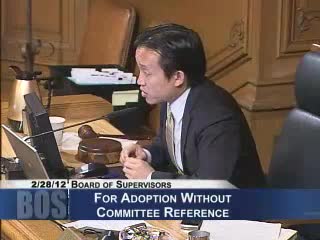
Supervisor Wiener proposed amendments to (1) eliminate the proposed increase to the mayoral cap and (2) limit the size of the election campaign fund so it cannot exceed $7,000,000, with minimum balances for mayoral and supervisorial election years. Wiener said the amendments would reduce the risk of overfunding the election campaign account while ensuring funds are available in election years.
After debate, the board adopted the Wiener amendments (except a severed portion) and then referred the ordinance and amendments back to the Rules Committee; the package will go to the Ethics Commission where it will be held for 30 days for review and recommendation before returning to the board.
Why it matters: The changes respond to constitutional constraints identified by the U.S. Supreme Court and alter how public financing will be distributed, the timing of disbursements and the size of campaign caps. Supervisors said the changes aim to preserve a viable public financing option while tightening expenditure controls.
Vote: The board voted to re‑refer the amended ordinance to Rules (which will send it to the Ethics Commission) by roll call; the motion to refer item 23 back to Rules passed 9 ayes, 2 noes. Several components were severed for separate votes; the package will return after the Ethics Commission's 30‑day review.
Ending: The measure will be considered again after the Ethics Commission reports back; supervisors urged the Ethics Commission and staff to work collaboratively on technical issues such as candidate filing and deadlines.