Get Full Government Meeting Transcripts, Videos, & Alerts Forever!
Get email alerts on the Bicycling Parking topic
No spam. Unsubscribe anytime.
Board approves first-reading ordinance requiring secure bike access in commercial buildings
Summary
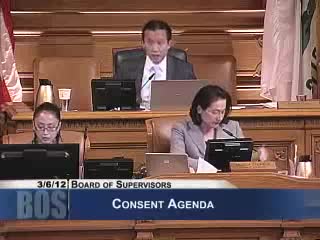
The San Francisco Board of Supervisors passed on first reading an ordinance amending the Environment Code to require owners of existing commercial buildings to provide secure bicycle parking access for tenants, after amendments clarifying exception procedures and implementation.
The San Francisco Board of Supervisors on March 2012 passed on first reading an ordinance amending the Environment Code to require owners of existing commercial buildings to provide secure bicycle parking and controlled access for building tenants.
Supervisor Obelos, the ordinance sponsor, said the law is intended to support the city's goal to increase bicycle commuting (including a previously adopted target of making 20 percent of trips by bicycle by 2020), reduce greenhouse gas emissions and take bicycles off sidewalks and streets where they are vulnerable to theft. "This legislation...requires that building owners or people who are responsible for the management of buildings, would provide access for bicycles to enter the buildings," Supervisor Obelos said.
The ordinance applies to commercial property and gives building tenants—rather than transient visitors or bike messengers—the privilege to access indoor secure parking through their tenant relationship with the building. The sponsor and supporters emphasized the measure does not require owners to construct a dedicated "bike room" nor does it apply to short-term visitors.
Supervisor Hsu, however, said he would vote against the ordinance because he was concerned about the burden on city inspection staff and the practicalities of exception handling. "From my understanding, there are two exceptions currently that would be granted. One is if it is unsafe or there's some kind of physical impediment, and another is if there is a comparable alternative off-street parking or secured indoor no-cost parking that's in the area," Hsu said, adding concerns about Department of Building Inspection capacity and the Municipal Transportation Agency's ability to provide off-site capacity where required.
Supervisor Avalos offered three technical amendments to clarify definitions, simplify the application process for exceptions, and broaden references to MTA units that might identify off-site facilities; those amendments were moved by Avalos and seconded by Supervisor Campos and accepted without objection. Avalos said the changes "will be clarifying what alternate bicycle parking consists of" and will make implementation easier for the Department of Environment and for building owners.
The Building Owners and Managers Association (BOMA) and the San Francisco Bicycle Coalition were named in the hearing record as supporters who worked with the sponsor on the draft ordinance. The sponsor also acknowledged staff assistance from legislative aides Frances Shea and Jeremy Pollock.
A roll-call vote on the amended ordinance showed nine ayes and two noes; the board clerk announced the ordinance was "passed on the first reading." The minutes show the no votes came from Supervisor Chu and Supervisor Ellsburn.
The ordinance proceeds to a subsequent hearing for the second reading and final adoption. The measure's implementation provisions rely on Department of Environment procedures to process exception applications and on existing building- and fire-safety codes to limit requirements where real impediments exist. The ordinance text and adopted amendments reference Planning Code Article 1.5 for the definition of secure alternate indoor bicycle parking and remove a certified-mail requirement for exception filings so applications must be "submitted to the Department of Environment in the manner required by that department."