Board approves amended Health Care Security Ordinance after heated public hearing

3005951 · April 16, 2025

Loading...

AI-Generated Content: All content on this page was generated by AI to highlight key points from the meeting. For complete details and context, we recommend watching the full video. so we can fix them.

Summary

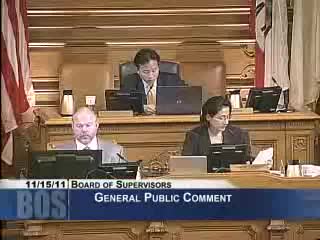
The San Francisco Board of Supervisors approved amendments to the city—s Health Care Security Ordinance in a 6-5 vote after a day-long public hearing in which labor groups, health workers and restaurant owners clashed over whether the changes close a perceived loophole in employer-provided health benefits.

President Chu and the Board of Supervisors voted to approve amendments to the Health Care Security Ordinance (HCSO) intended to curb misuse of employer-collected surcharges and to change how employer-funded Health Reimbursement Arrangements (HRAs) are treated. Supervisor Cohen moved the amendments and President Chu seconded; the measure passed 6-5 on a recorded roll call.

The ordinance amendments require clearer employee notice about HCSO rights, address restaurant surcharges that advertise health benefits, and create a 24-month rolling accrual approach intended to give employees continued access to funds across calendar years. Supporters called the package a pragmatic compromise to expand worker access while limiting the risk of employer layoffs.

"We are going to be legislating notice provisions," President Chu said during final remarks. "We're going to be addressing the surcharge situation... and the so called January problem. I don't think that's going backwards." He urged colleagues to pass the changes and backed technical amendments offered on the floor.

Labor groups, immigrant-worker organizations and several health-care providers opposed the amendments, saying they leave an opening for employers to restrict meaningful coverage. "These HRAs are the cheapest form of health care under our health care security ordinance," Connie Ford of the San Francisco Labor Council said during public comment. "Any time there is an incentive for the employer to get back the money, they will look for a way to get back the money." Tim Paulson, executive director of the San Francisco Labor Council, told the board that the change amounted to "a step backwards," saying earlier reforms that increased access for low-income workers would be undermined.

Several small-business owners and representatives of the Chamber of Commerce and the Golden Gate Restaurant Association urged the board to accept the amendments, calling them a necessary compromise to avoid large cash demands on employers and possible job losses. Jennifer Piazza, owner of Zazie restaurant, said her business covers full Kaiser insurance for employees despite charging a $1 surcharge and warned that extending the accrual rules further would harm small operations.

The debate tracked three main concerns: (1) whether the measure would legally close the longstanding "January loophole" that allows employers to avoid delivering health benefits collected by surcharges; (2) whether permitting multi-year accruals for employer HRAs would in practice preserve employees' access to meaningful care; and (3) whether the amendments increase the city's legal risk under federal law and past court challenges to HCSO.

Supervisor Campos, sponsor of the earlier, stricter proposal to close the HRA loophole, argued that the Cohen-Chu amendments do not close the loophole and could entrench HRAs as an acceptable substitute for comprehensive health coverage. "This amendment does not close the loophole," Campos said on the record, arguing that employers would still have an incentive to limit eligible services and that taxpayers would continue to bear costs at public hospitals. Campos and members of the coalition that pushed for a tighter fix said they will continue advocacy outside the ordinance process, including possibly a voter measure.

The board adopted several technical changes offered by Supervisor Cohen during the hearing: (1) aggregation of requirements for employer HRA disclosures into a single findable code section; (2) a specified list of information employers must provide in notices to employees; (3) adjusted penalty language using a $100 per-employee-per-violation standard to improve enforceability; and (4) clarification that notice and reporting timeframes are measured in business days and that surcharge reporting covers a full 12-month period.

Among witnesses, public-health practitioners urged stronger protections. Reiko Fruya, an intensive-care nurse, described patients who delayed care and later developed life-threatening infections, saying timely access to primary care matters for public health and arguing the stricter fix would save lives. Clinic representatives, community organizations (including the Chinese Progressive Association and Young Workers United), and SEIU Local 1021 also urged the board to reject the amendments and push for a fuller closure of the loophole.

Business and small-employer speakers said they supported elements of the Cohen-Chu amendment, particularly improved notice and protection against consumer fraud (restaurants advertising a health surcharge but not directing funds to employee health). The Small Business Commission reported it supported the amendments presented, while expressing concern about cash-flow impacts for a minority of narrow-margin employers.

The final roll call on the motion to adopt Supervisor Cohen's amendments (as seconded by President Chu) recorded six ayes and five no votes; the board declared the ordinance passed in the first reading as amended. The tally recorded on the transcript was: Chu — aye; Cohen — aye; Ellsburn — aye; Farrell — aye; Kim — no; Mar — no; Mercarimi — no; Weiner — aye; Avalos — no; Campos — no; Chu (final confirmation) — aye. The board chair announced "There are 6 ayes and 5 nos." (The official clerk—s roll call is the authoritative record of votes.)

Several supervisors who opposed the amendments urged ongoing work and broader community engagement. Supervisor Campos said his coalition "may be losing this battle, but the war is not over," and said he would pursue other avenues to close the HRA loophole, including potential ballot options.

The ordinance as amended will return to the board for subsequent readings and any final actions required by charter and municipal process. The Office of Labor Standards and Enforcement and the Small Business Commission were both involved in drafting the technical changes and will have roles in implementation and monitoring.

Ending: The vote leaves in place a modified HCSO intended to reduce misuse of advertised surcharges and provide employees with more continuous access to HRA funds, while preserving new guardrails intended to limit sudden employer cash demands. Opponents said the amendments fall short of fully protecting workers; supporters said the package balances worker access with small-business solvency. The debate is likely to continue in the community and through further legislative or ballot efforts.