Get Full Government Meeting Transcripts, Videos, & Alerts Forever!
Get email alerts on the City Governance Votes topic
No spam. Unsubscribe anytime.
Supervisors approve package of ordinances; realignment, gun-safety findings and a $15.75 million settlement move forward
Summary
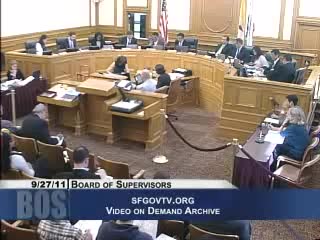
The San Francisco Board of Supervisors on Sept. 27 adopted a package of ordinances and resolutions addressing public safety, building standards, film production incentives and a settlement appropriation, and took action to align city rules with a recent U.S. Supreme Court decision on public campaign financing.
The San Francisco Board of Supervisors on Sept. 27 adopted a package of ordinances and resolutions addressing public safety, building standards, film production incentives and a settlement appropriation, and took action to align city rules with a recent U.S. Supreme Court decision on public campaign financing.
Why it matters: The board's actions include measures tied to the state's prisoner realignment program, local gun-safety laws now facing federal litigation, and a roughly $15.75 million settlement authority — items with budgetary and legal consequences for the city.
Key outcomes
- Adult Probation / Realignment (Item 26): The board passed an ordinance assigning the Adult Probation Department to lead San Francisco’s intake and supervision work related to state prisoner realignment. Supervisor McPremier summarized the shift: “Every single county in the state of California will be receiving back state prisoners to each jurisdiction.” The ordinance passed on first reading.
- Gun-safety findings (Item 27): An ordinance amending the Police Code to add legislative findings supporting existing local rules requiring handguns be kept locked or disabled and prohibiting sale of “enhanced lethality” ammunition was passed on first reading after Deputy City Attorney Sherry Kaiser explained the change is meant to give courts the factual record to review the ordinances; she said, “It gives the court something to look at.”
- Film rebate and permit-fee changes (Item 24): The board amended the administrative code to expand the city’s film rebate program to include documentary and reality productions and reduce permit fees for low-budget films (under $500,000) from $300 to $100 per day; the ordinance passed on first reading.
- Green building requirements (Item 25): The board amended the Green Building Requirements for City Buildings to adjust an effective date to avoid retroactivity and passed the ordinance on first reading as amended.
- Mitchell Engineering settlements (Item 28): The board authorized settlement of lawsuits involving Mitchell Engineering and an appropriation and bonds not to exceed $15,750,000; the ordinance passed on first reading.
- Miscellaneous roll-call group (Items 2–7 and 9–22): Early in the meeting a block roll call carried for items 2 through 7 and 9 through 22; the clerk recorded unanimous affirmative votes during that roll call.
Public financing change (Item 36)
Board members debated a separate ordinance to amend the campaign and governmental conduct code to cap the amount of public matching funds in response to the U.S. Supreme Court’s recent decision striking down a comparable Arizona provision. Supervisors described the issue as legally urgent; Supervisor Farrell argued the city must move to avoid costly litigation and potential taxpayer exposure. The initial roll call on that ordinance produced seven ayes and three noes (one supervisor absent), a tally short of the eight votes required for passage; the item was then rescinded and continued for further work.
What the board did not finalize
- Wireless facility appeal (Items 31–34): A conditional-use appeal concerning a proposed rooftop wireless facility at 4141 Geary Blvd. was continued to Oct. 25 at the sponsor’s and appellants’ request to allow further meetings.
Next steps and context
Several measures were taken “as amended” or on first reading; those items typically return for a second reading or final adoption under local rules. Supervisors signaled they will ask the Ethics Commission and city attorneys to develop additional options on public finance that could withstand recent federal case law.
Ending note: The board heard extensive policy presentations during the meeting that will shape follow-up work, particularly on probation realignment funding and legal strategy around firearm-related ordinances.