Get Full Government Meeting Transcripts, Videos, & Alerts Forever!
Get email alerts on the Worker Healthcare topic
No spam. Unsubscribe anytime.
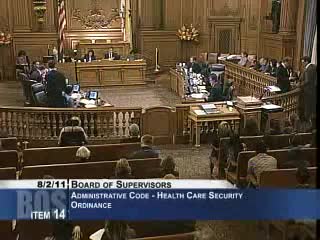
Board tables Health Care Security ordinance amendments after extended debate over HRA loophole
Summary
Supervisor Campos proposed amendments to close a perceived loophole in Healthy San Francisco reimbursement accounts (HRAs); after lengthy debate about legal risk, business impacts and implementation, Supervisor Campos moved to table the item and the Board voted to table it.
After several hours of debate on Aug. 2, the San Francisco Board of Supervisors voted to table proposed amendments to the city’s Health Care Security Ordinance that would tighten rules on employer-administered health reimbursement accounts (HRAs) and close what proponents called a loophole allowing some employers to avoid providing workers the intended benefits.
Supervisor Campos introduced the amendments and urged colleagues to close a loophole he said allowed a small number of businesses to collect HRA funds without those funds reaching workers. Campos described an amendment that would impose an 18-month inactivity limit on HRA accounts after an employee leaves: if there is no activity during that period, the employer would no longer be required to maintain the account and, under the draft language, could allow the account to revert to the employer consistent with specified conditions. Campos said the change would align private-sector requirements with how the city handles similar accounts in Healthy San Francisco.
“Protecting the rights and interests of these workers includes many things and certainly making sure that they get compensated as the law requires is part of it,” Campos said. He said the intent was to close the minority of cases in which consumers are charged but workers receive no benefits.
Supporters of the amendment included labor representatives and supervisors who argued the changes would protect workers and consumers and level the playing field for businesses that comply with the ordinance. Supervisor Abalos and others urged a vote on the amendments at the meeting.
Opponents, including President Chu and several supervisors, voiced concerns about legal exposure under federal ERISA law and about potential layoffs or other business impacts. Chu argued that conditioning the city’s policy without clear legal defensibility risked undermining the entire Healthy San Francisco program, and she asked for time to consider legal and operational implications. Supervisor Weiner and others called for more dialogue with business and labor to hone a legally defensible solution.
After extended debate and attempts to amend and continue, Supervisor Campos moved to table the item; the board voted 9 ayes and 2 noes to table the measure. The clerk announced that the item was tabled. Several supervisors said they remained committed to protecting workers’ access to care but concerned that a rushed change could jeopardize the overall ordinance or produce unintended legal consequences.
Public commenters and labor representatives attended the hearing; supervisors referenced meetings with business, labor, the Golden Gate Restaurant Association, and other stakeholders. The board also noted broader budget and policy considerations, including the impact of upcoming federal changes to health-care rules.