Get Full Government Meeting Transcripts, Videos, & Alerts Forever!
Get email alerts on the Urban Forestry topic
No spam. Unsubscribe anytime.
Supervisors press city to find long-term funding for street-tree maintenance as pruning cycles slip to nine years
Summary
Supervisor Scott Wiener urged the city to find sustainable funding for street-tree maintenance as DPW’s pruning cycle stretches to nine years, raising safety and equity concerns for property owners.
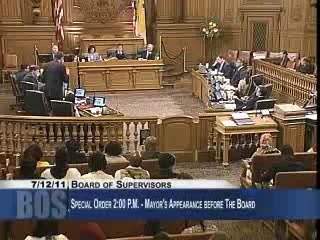
Supervisor Scott Wiener raised concern about a decline in tree maintenance funding at the Board of Supervisors, asking the mayor and staff to seek durable revenue sources for urban forestry maintenance.
Wiener said cuts to Department of Public Works (DPW) and Recreation & Parks tree budgets have led to safety hazards from falling branches and shifted maintenance responsibilities to property owners. He proposed exploring sustainable funding mechanisms such as a tree parcel tax or a tree assessment district and asked whether the board would prioritize a source of steady funding so maintenance does not fall to individual property owners.
Mayor Edwin Lee acknowledged the problem and said the city has more than 100,000 street trees citywide. “The Department of Public Works ... is responsible for maintaining about 35,000 of them and property owners already are responsible for some 65,000,” Lee said. He said industry standards call for pruning every three to five years, but DPW’s actual maintenance cycle was about nine years in the current fiscal year, and could lengthen next year without additional funds. Lee said the planning department received a Strategic Growth Council grant to complete an urban forestry master plan and that $300,000 was restored to DPW this year — a modest step, he said, that will need to be leveraged with public and private cooperation.
Why it matters: a stretched tree-maintenance program increases public-safety risk from falling branches, can shift unpaid burdens to homeowners and may reduce the city’s urban canopy over time. The urban forestry master plan and potential financing mechanisms could define a multi-year approach to maintenance and planting.
Next steps: the planning department’s master plan consultant will present financing and management options. Supervisors asked staff to evaluate those options and consider potential ballot or legislative measures that could provide dedicated funding for street-tree maintenance.