Get Full Government Meeting Transcripts, Videos, & Alerts Forever!
Get email alerts on the Public Works topic
No spam. Unsubscribe anytime.
Property owners protest graffiti assessments; DPW removes some properties from tax roll and agrees to case‑by‑case follow up
Summary
At a public hearing the Department of Public Works presented a list of properties for assessment to recover the cost of abating blight (notably graffiti). Multiple property owners and managers said they regularly remove graffiti but still received fines or delayed notices; DPW said payments on several parcels were recorded
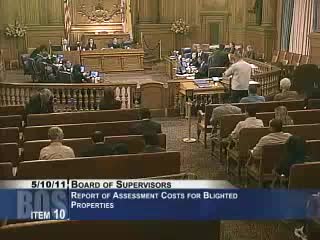
The Department of Public Works brought a report of assessment costs for blight abatement to the Board of Supervisors and heard public objections from owners and managers of properties cited for graffiti and other blight conditions.
DPW inspector Kenny Bruce told the board that under Chapter 80 of the Administrative Code, property owners must maintain properties free of blight and that the department sought approval to place unpaid abatement costs on property tax bills. He read a list of properties and said several were being removed because DPW had received payment in the last few days.
More than a dozen speakers — building owners, tenants and neighborhood representatives — told the board they routinely remove graffiti and that they had been fined despite prompt cleanup. Several speakers said notices arrived at the same time as abatement citations, leaving no reasonable time window to respond. Others asked for stronger law‑enforcement action against vandals, citing repeated tagging.
DPW staff told speakers the process includes a 30‑day notice to remove graffiti, a follow‑up reinspection and a subsequent 15‑day blight notice at which time a $250 administrative fee is attached; owners can request hardship hearings before an administrative law judge. DPW said it would work case‑by‑case and invited speakers to meet staff after the hearing. The department removed a number of properties from the assessment list after learning payments had been made in the days before the hearing.
The board left the hearing open for follow‑up and, after DPW agreed to amend the report and work with property owners, moved to adopt the amended report without objection. DPW said it would file an amended list with the clerk and continue outreach to property owners about appeal and hardship procedures.
Speakers also asked for better policing and school‑based prevention programs; supervisors acknowledged the enforcement challenges and said the city would pursue a combination of property owner support, law enforcement coordination and education.