Get Full Government Meeting Transcripts, Videos, & Alerts Forever!
Get email alerts on the Open Meetings topic
No spam. Unsubscribe anytime.
Board goes into closed session on Park Merced litigation; public raises Brown Act concerns
Summary
The Board convened a closed session to receive advice from the city attorney regarding threatened litigation potentially arising from the proposed Park Merced development project. Members of the public questioned whether the statutory "facts and circumstances" threshold for a litigation‑based closed session had been met.
The San Francisco Board of Supervisors recessed into closed session on May 3 to receive advice from the city attorney about threatened litigation potentially arising from the proposed Park Merced development project.
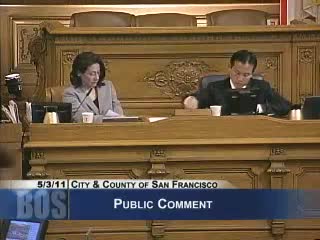
Before the board moved behind closed doors, members of the public urged the supervisors to state on the record the basis for the closed session. David Pilpel told the board he believed the Brown Act and the city’s Sunshine Ordinance require a specific ‘‘facts and circumstances’’ showing to justify a closed session for threatened litigation, and he said he did not believe that showing had been made. Pilpel asked the board to articulate the legal basis on the record and said allowing a closed session under the circumstances could set a precedent for using closed sessions on land‑use matters generally.
President Chu told Pilpel there would be a public opportunity to comment specifically on whether the board should go into closed session after the remainder of the public comment period, and the board then voted without objection to convene the closed session. A motion to go into closed session was offered by Supervisor Weiner and seconded by Supervisor Farrell; the chair announced the board would reconvene within about 30–35 minutes and would take public comment on the closed‑session question immediately before entering.
The board later returned to open session and voted not to disclose the closed‑session discussion.
Speakers and public commenters in the meeting record include David Pilpel and Supervisor Weiner.
This article reflects only the public portions of the meeting record concerning the closed‑session request; the substance of the closed session was not disclosed by the board.