Get Full Government Meeting Transcripts, Videos, & Alerts Forever!
Get email alerts on the Telecom Infrastructure topic
No spam. Unsubscribe anytime.
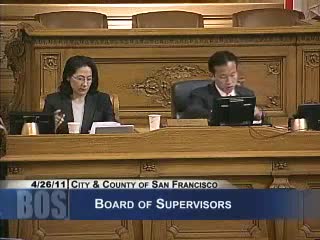
Board continues appeal hearing on AT&T Lightspeed exemption after hours of testimony
Summary
Supervisors heard more than three hours of testimony on whether AT&T's planned Lightspeed cabinets require an Environmental Impact Report. Planning staff recommended the categorical exemption; appellants and dozens of residents urged a full EIR. The board voted to continue the appeal to a later meeting for further review and outreach.
The Board of Supervisors closed a multi‑hour hearing on an appeal of the Planning Department's categorical exemption for AT&T's Lightspeed network and voted to continue the matter for further consideration.
The hearing, which drew neighborhood groups, labor representatives and company officials, centered on whether AT&T's plan to install hundreds of new street cabinets and related equipment is exempt from environmental review under CEQA or whether the scale and cumulative effects require an Environmental Impact Report. Planning staff recommended upholding the department's Class 3 categorical exemption; appellants urged the board to overturn that decision and require an EIR.
Appellants and many neighborhood speakers argued the scale'726 cabinets in San Francisco'could create cumulative aesthetic and pedestrian impacts and that an EIR is the appropriate mechanism to assess alternatives such as undergrounding or locating equipment on private property. "Categorical exemptions basically are the legislator's attempt to avoid unnecessary environmental review," said appellants' counsel Susan Brandt Holly, arguing that the exception is rebuttable when cumulative effects or unusual circumstances are present.
AT&T officials said the project will bring competition, faster consumer broadband and union jobs. "I plan to spend upwards to $75,000,000 hiring skilled union labor to put more fiber optic cables in the ground," Ken McNeely, president of AT&T California, told supervisors, and representatives described a multi‑step permitting process and neighborhood outreach for each cabinet.
City planners said they evaluated the project as proposed and found no substantial evidence of a significant aesthetic or other environmental impact that would invalidate the categorical exemption. Department of Public Works staff explained the department's surface‑mounted facilities order, which requires applicants to demonstrate efforts to locate equipment on private property and to assess undergrounding at each site.
After extended public comment from dozens of speakers on both sides'including neighborhood residents concerned about sidewalk clutter, graffiti and pedestrian impacts and community groups and unions supporting broadband competition and jobs'the board voted to continue the appeal to allow more time for review and for staff, AT&T and opponents to refine the record and proposed protocols. The motion to continue passed by roll call, 10 ayes to 1 no.
What to expect next: the continuation will give the board time to review legal questions about the fair‑argument standard under CEQA, gather technical evidence on undergrounding and private‑property alternatives, and consider whether additional mitigation measures or binding neighborhood protocols are feasible before ruling on whether the categorical exemption applies.
Why this matters: the decision affects how much new telecom infrastructure will be placed on San Francisco sidewalks, whether neighborhoods can require more stringent siting or mitigation, and whether the city will host a competing broadband TV and Internet provider in addition to existing cable service.