Get Full Government Meeting Transcripts, Videos, & Alerts Forever!
Get email alerts on the Public Health topic
No spam. Unsubscribe anytime.
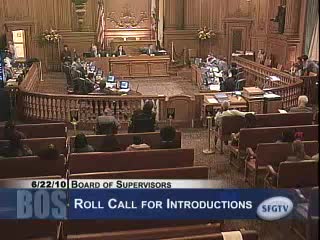
Supervisor Avalos introduces ordinance to charge alcohol wholesalers for city alcohol-related costs
Summary
Supervisor Avalos introduced an ordinance establishing an "alcohol mitigation fee" on wholesalers and distributors to recover city costs the controller's nexus study attributed to alcohol-related harms, including public health and emergency services.
Supervisor Avalos introduced an ordinance to establish an alcohol mitigation fee that would charge wholesalers and distributors — not retailers — for a share of the public costs the city attributes to alcohol consumption.
Avalos said the fee would be assessed at the wholesaler/distributor level at a rate equivalent to roughly 7.5 cents per ounce of ethanol (about 4.5 cents per standard drink, as stated in his remarks). He said the controller’s office commissioned a nexus study by the Lewin Group and Oxford Outcomes that identified more than $17 million in direct alcohol-related costs to the city and county of San Francisco. The ordinance would direct fee revenue to unreimbursed health-care costs related to alcohol, emergency transport costs related to alcohol, alcohol prevention and treatment programs administered by the Department of Public Health, and administration costs tied to fee collection and enforcement.
Under the introduction made on the floor, the city treasurer would collect the fee quarterly. Avalos said the first fee, if the ordinance is adopted, would be due Jan. 31, 2011, for liable operations through Dec. 31, 2010. He thanked the controller’s office for funding the nexus study and named outside groups and staff who participated in drafting the ordinance.
The item was introduced on the floor and sent forward for committee consideration; no final vote on the ordinance was recorded at the meeting.
Why it matters Avalos framed the proposal as a mechanism to fund substance-abuse treatment and prevention programs that local advocates say are underfunded despite recent ballot and policy commitments. The proposal targets upstream industry actors (wholesalers and distributors) rather than retailers or consumers, and ties the fee to a controller-commissioned nexus study that the supervisor cited in the meeting record.