Get Full Government Meeting Transcripts, Videos, & Alerts Forever!
Get email alerts on the Land Use Ceqa topic
No spam. Unsubscribe anytime.
Board upholds Planning Department on CEQA exemption for 10 Lundy's Lane; neighbors' appeal denied
Summary
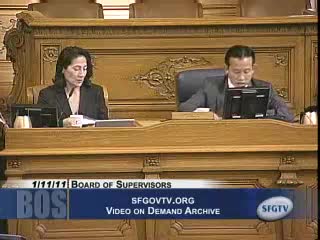
After a contested hearing, the Board of Supervisors affirmed the Planning Department's determination that a revision permit to rebuild rear walls in kind at 10 Lundy's Lane is categorically exempt from CEQA; the board voted 11-0 to deny the appeal and table related items.
The San Francisco Board of Supervisors voted Tuesday to uphold the Planning Department’s categorical-exemption (CEQA) finding for a building revision at 10 Lundy’s Lane, denying an appeal by nearby neighbors who had sought environmental review.
Supervisor David Campos moved to affirm the Planning Department’s determination; the motion, which also tabled two related items, passed on an 11-0 roll call.
The dispute centered on a field revision to an existing renovation that the department said was limited to replacing rear walls “in kind” after dry rot was discovered. Appellants argued the work should have triggered environmental review because it affects a building constructed before 1913 and because the permit cluster contained procedural irregularities, including neighborhood-notification concerns and allegations of an illegal unit and other noncompliance.
Planning Department staff, represented at the hearing by Anne Marie Rogers and zoning administrator Scott Sanchez, told the board the revision did not involve demolition or façade alterations that would trigger CEQA review and that the work primarily concerned a 1970s-era nonhistoric addition. The department said the CEQA determination could be made while the permit remained open, and that the revision did not rise to the level of a “de facto demolition” requiring more extensive review.
Counsel for the property owners, Brett Gladstone, and homeowner Anne Hughes said the family bought the home to remain in the neighborhood and that delays caused by repeated appeals had caused financial hardship; supporters including teachers and neighborhood groups urged the supervisors to allow the renovation to proceed so the family could occupy the residence.
Appellants, represented by John Soto, argued the city’s internal processes had produced inconsistent determinations and that the replacement work would enlarge an illegal extension and affect neighbors’ light, air and privacy. Soto presented neighborhood maps and historic Sanborn map excerpts during his remarks.
After hearing from the parties and members of the public on both sides, Supervisor Campos said the Planning Department’s response and the record did not provide substantial evidence to overturn the CEQA exemption. The board therefore denied the appeal and directed that items 6 and 7 be tabled while approving item 5 (the affirmation of the department’s CEQA decision).
The decision allows the owners to resume work under the existing permit framework, while the board noted appellants may have other administrative remedies previously exhausted in prior stages of the permit process.