Get Full Government Meeting Transcripts, Videos, & Alerts Forever!
Get email alerts on the Environment Drug Stewardship topic
No spam. Unsubscribe anytime.
Supervisors refer proposed drug stewardship ordinance after sponsor outlines take‑back plan
Summary
An ordinance that would require drug manufacturers to fund residential drug take‑back programs was introduced and sent back to the Public Safety Committee after a sponsor outlined a one‑year trial and ongoing negotiations with the pharmaceutical industry.
An ordinance that would amend San Francisco’s Environment Code to require producers of drugs sold in the city to participate in an approved drug stewardship program was introduced on Tuesday and referred back to the Board’s Public Safety Committee.
The ordinance sponsor described the measure as an effort to reduce pharmaceutical contamination of wastewater, prevent accidental poisonings, and curb recreational misuse by creating an industry‑funded take‑back system for unwanted residential medications. The sponsor said existing local programs such as San Mateo County’s receptacle system — with collection boxes at police stations and participating pharmacies — provided a model.
The sponsor told the board the proposal would not rely on the city’s general fund and urged the pharmaceutical industry to assume shared financial responsibility for collection and disposal. The sponsor said earlier pilot programs in San Francisco had been limited to five police stations and about 10 independent pharmacies and that national retail chains, including Safeway and Walgreens, had declined to participate at consumer expense.
The sponsor said the city and the mayor’s office had agreed to create a larger one‑year trial program, roughly doubling the size of the existing interim program, and indicated that the administration would work to expand the trial without using general fund dollars. The sponsor also said the city had negotiated with industry representatives and expects federal rules later in the year to provide additional direction.
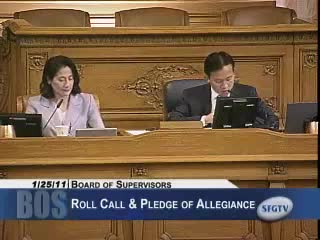
Supervisor MacRae made a motion to refer the ordinance back to the Public Safety Committee; Supervisor Avalos seconded. President Chu called for no objection and the motion carried, sending the item back to committee for further work and negotiation.
The referral preserves committee oversight while staff and the sponsor continue to negotiate program details and cost responsibilities with industry and the mayor’s office.
Votes and next steps: the referral to the Public Safety Committee was made by motion, seconded, and approved by unanimous consent; no roll‑call tally was required. The sponsor indicated the committee will consider a one‑year pilot with an expanded set of collection receptacles and seek to avoid direct city funding for ongoing operations.
Context: The sponsor cited federal statistics on medication misuse and on environmental contamination from improperly discarded pharmaceuticals and noted that at least 10 states have considered or enacted take‑back laws. San Mateo County was held up as a local example of a pharmacist/police‑station receptacle program that earned statewide recognition, the sponsor said.
What remains unresolved: the ordinance text will return to committee with details to be negotiated, including the precise list of required producer responsibilities, the scope of the one‑year pilot, and the city’s financial exposure if litigation or other obstacles arise. The sponsor said industry representatives, including trade groups, have been engaged in talks but that the specifics of cost‑sharing were not finalized.
Sources and attribution: statements summarized in this article are drawn from the sponsor’s remarks to the Board of Supervisors during the meeting and from the recorded motion and subsequent procedural action that referred the item to committee.