Patients and volunteers tell supervisors Access of Love is a charitable collective, urge planning to stop enforcement
Loading...
Summary
At the Board of Supervisors meeting, dozens of patients, volunteers and nonprofit representatives urged supervisors to recognize Access of Love as a charitable, membership-based medical-cannabis collective rather than a retail dispensary and asked the board to direct the Planning Department to halt enforcement action while the Health Department’s jurisdiction is confirmed.
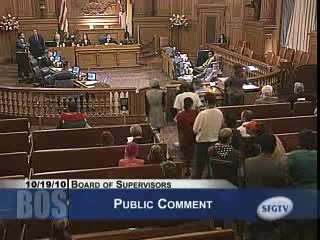
Public comment at the San Francisco Board of Supervisors’ meeting focused heavily on Access of Love, a community center that several speakers described as a charitable medical-cannabis collective and social-services provider. Multiple members, volunteers and allied nonprofit leaders told the board they had received a notice from the Planning Department suggesting further review or enforcement, and they urged supervisors to uphold the city’s sanctuary status for medical cannabis and to recognize the Health Department’s role.
Shona Gopnar — introduced in the chamber as the director of Access of Love — said a subsequent Planning Department visit found no registers, menus, or other retail operations and that Access of Love functions as a nonprofit collective offering meetings, meals, harm-reduction services, housing assistance and medicine distribution to qualifying members. Several longtime members and volunteers described the center’s women’s group, veterans support, food distribution and harm-reduction classes. Speakers said the center receives program support from HopeNet and the 1944 Ocean dispensary, and they said Access of Love provides charity-based services to low- and no-income patients without charging at point of service.
Catherine Smith, identified on the record as running HopeNet, told the board that HopeNet and 1944 Ocean had provided letters to the Health Department describing Access of Love as being sponsored by those permitted dispensaries and that, under that arrangement, Access of Love functions as a charitable satellite rather than a retail storefront. Other speakers — including members who said they rely on Access of Love for housing, meals, medication and social supports — said the center has no cash registers or price lists and called the Planning Department notice an instance of “harassment” of a sanctuary-status collective.
Several callers urged the board to do three things: (1) reaffirm that the Health Department has primary jurisdiction over medical-cannabis matters under the city’s local medical-cannabis rules; (2) direct Planning to stop enforcement actions against Access of Love while jurisdictional questions are resolved; and (3) preserve the charitable services that low-income patients rely upon. Speakers also urged the board to clarify local code language so that sanctuary and charity-based, non-exchange collectives are protected from misclassification.
There was no formal action or vote recorded on the floor addressing the Planning Department letter during the meeting; the matter was raised in public comment and will require follow-up. Speakers noted specific legal and planning references when arguing their case — for example, one commenter referenced a planning-code category (spoken as “2 17 d”) that, in their view, would allow a philanthropic social-service use at Access of Love’s location — and others cited the Medical Cannabis Dispensary (MCD) framework in arguing that Access of Love’s activities are outside definition of a retail dispensary.
What speakers said:
- Shona Gopnar, director, Access of Love: described planning staff visits that found no cash registers or menus and said the center’s services are targeted to low-income patients and delivered on a charitable, membership basis.
- Catherine Smith, HopeNet: confirmed HopeNet’s sponsorship and said HopeNet and 1944 Ocean had provided supporting letters to the Health Department to document Access of Love’s charitable sponsorship and relationship.
- Multiple members and volunteers (identified in the transcript): recounted that Access of Love provides meals, harm-reduction groups, housing assistance and medical cannabis to members who could not otherwise afford medicine.
Next steps: The board did not take a formal vote on the Access of Love issue during the meeting. Several commenters asked supervisors to direct the Planning Department to “cease and desist” enforcement pending interdepartmental clarification and to preserve the center’s charitable services; if supervisors choose to act they could do so by referral to committee, a board resolution asking for interdepartmental coordination, or a letter to Planning and Public Health clarifying enforcement priorities.