Get Full Government Meeting Transcripts, Videos, & Alerts Forever!
Get email alerts on the Drug Takeback topic
No spam. Unsubscribe anytime.
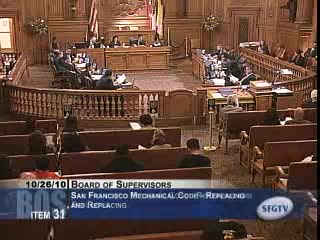
Supervisors adopt amendments and continue drug disposal ordinance for industry talks
Summary
Supervisor McRae's ordinance to require producers to participate in a drug stewardship and take-back program advanced after the board adopted proposed amendments and agreed to continue the measure for four weeks so pharmaceutical industry representatives and city environmental staff can meet.
The Board of Supervisors on Tuesday considered an ordinance that would require producers of drugs offered for sale in San Francisco to participate in an approved drug stewardship program for collection and disposal of unwanted medicines from residential sources.
Supervisor Ross Mirkarimi McRae (listed in the transcript as Supervisor McRae) introduced the ordinance and described public‑health and environmental reasons for the measure, citing national statistics on accidental pediatric poisonings and studies finding pharmaceuticals in waterways. He proposed several amendments to the draft ordinance and moved to adopt those amendments on the floor; the board adopted the amendments without objection.
Highlights of the adopted amendments, as described on the floor, include language requiring wholesalers to provide certain information to the city (without imposing producer duties on wholesalers), excluding cosmetics from the definition of covered products, and delaying the chapter's application to controlled substances in nonprescription drugs until Jan. 1, 2012.
Supervisor McRae asked that the measure be continued to allow the pharmaceutical industry, the Department of the Environment and other stakeholders to meet and present proposals. The board agreed to continue the item to Nov. 23, and the author said the continuance was intended to give the industry four weeks to demonstrate genuine willingness to participate in a shared solution.
Several supervisors supported the continuance and the outreach plan. Supervisor Dufty noted that local pharmaceutical employers such as McKesson Corporation should be given a chance to comment. Supervisor Duffy emphasized existing return programs offered by retailers and community groups and called for broader outreach to stakeholders.
The board did not vote to adopt the ordinance at the meeting; it approved the amendments and continued the ordinance to Nov. 23 for further stakeholder meetings and environmental department participation.
Votes and formal action - Motion to adopt the author's amendments: adopted without objection. - Motion to continue the ordinance to Nov. 23, 2010: approved without objection.
What happened and why it matters The proposed "take-back" program is intended to reduce accidental ingestion by children, limit opportunities for diversion of prescription drugs, and reduce pharmaceutical contamination of waterways. The author and his allies highlighted national and local data on ER visits, suicide attempts involving pharmaceuticals, and water‑quality studies. The continuance gives the department and industry a month to negotiate details such as reporting obligations, covered products and timelines before the measure returns to the board.