Get Full Government Meeting Transcripts, Videos, & Alerts Forever!
Get email alerts on the Formula Retail Pet Food Express topic
No spam. Unsubscribe anytime.
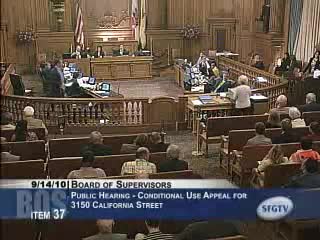
Board tables decision on Pet Food Express conditional‑use appeal after long hearing; commission approval remains in effect
Summary
After a full‑day appeal hearing on a Planning Commission decision to allow a Pet Food Express at 3150 California Street, the Board of Supervisors tabled further action, leaving the commission approval in effect while parties continue to negotiate and opponents gather more evidence.
After a multi‑hour hearing and extensive public testimony from small independent pet retailers and animal‑welfare organizations, the San Francisco Board of Supervisors did not overturn the Planning Commission’s July 8 conditional‑use authorization that would allow a Pet Food Express store at 3150 California Street. Instead the board tabled the appeal, leaving the Planning Commission decision in place for the time being.
Appellants represented a coalition of small pet shops (Safe San Francisco Neighborhood Pet Shops) and the Small Business Commission, arguing the chain would undercut local specialty retailers and erode neighborhood commercial character. Susan Landry, the named appellant, and business owners said Pet Food Express’s pricing practices and buying power threaten independent stores that depend on sale of commodity items such as premium food to sustain their margins.
Pet Food Express founder Michael Levy and company representatives said the chain is locally grown, highlights animal‑welfare adoption partners and donates to local shelters and rescue groups. Levy told the board his company already operates two San Francisco stores and that a new location would add jobs and sales tax and help fill a long‑vacant storefront.
What the board did
An initial motion to affirm the Planning Commission’s conditional‑use authorization (motion to uphold the commission) was put to a roll‑call vote and failed, 5 ayes to 6 noes. After further deliberation, the board voted to table items 38–40 — effectively pausing board action and leaving the commission approval intact while giving the parties additional opportunity to negotiate or provide further information.
Key points from testimony and staff
Appellants: Small, neighborhood‑focused retailers and the Small Business Commission argued the formula‑retail controls (Planning Code section 703.3) were intended to preserve neighborhood character and prevent chain‑store proliferation in neighborhood commercial districts. They cited City planning code provisions (section 703.3 priorities cited in the hearing), petitions and several hundred letters and petitions opposed to the specific Laurel Heights/California Street location.
Supporters: Pet Food Express, merchants in the immediate neighborhood and a number of local nonprofits — including animal‑welfare organizations — said the company has a record of local philanthropy, creates jobs and would reuse a vacant commercial space. Several neighborhood merchants associations and the project’s survey of 93 nearby merchants reported majority support for the store in the immediate commercial area.
Planning department: Staff and the Planning Commission said the required formula‑retail criteria were evaluated using a quarter‑mile radius and an analysis of adjacent neighborhood commercial districts; the department said the site had been vacant and supported the finding that the use is compatible with the area. Staff also said planning’s quarter‑mile approach is an established benchmark for analyzing concentration and compatibility.
Legal/policy considerations raised by board members
Several supervisors questioned whether the quarter‑mile radius and other planning‑department metrics sufficiently account for citywide competition and “destination” effects for a large retail outlet with on‑site parking. Some supervisors urged the department to re‑examine its methodology because a destination retail site can draw customers from beyond a narrow radius and thus affect stores citywide. Planning staff and the director said the department evaluates each proposal in its neighborhood context and that deeper citywide market analysis is not part of the standard formula‑retail review.
Outcome and next steps
The board’s initial roll‑call vote to affirm the Planning Commission decision failed (5–6). A subsequent motion to table the items passed; by tabling, the board left the Planning Commission’s approval in place for now and preserved the appellants’ ability to return with further arguments or negotiated conditions. The board asked planning staff to note apparent errors in its report language where staff believed an internal drafting mistake had suggested citywide conclusions that the department had not made.
Why it matters
The case spotlights tensions between preserving neighborhood‑serving independent retail and allowing larger regional chains to open in underused commercial properties. The outcome keeps the commission’s approval in effect but leaves the issue open for further negotiation or return to the board.