Get Full Government Meeting Transcripts, Videos, & Alerts Forever!
Get email alerts on the Municipal Finance topic
No spam. Unsubscribe anytime.
Board approves water-system bond plans, SOMA stabilization funds, financial-reserve policy and other measures
Summary
The Board of Supervisors approved a package of ordinances and resolutions covering water system financing, a South of Market stabilization allocation, a binding financial policy, and multiple smaller items. Several measures passed on their first reading without objection; the South of Market funding passed 10-1.
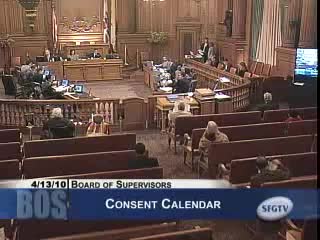
San Francisco's Board of Supervisors on April 13 approved a series of ordinances and resolutions covering municipal finance, development rules and business-fee relief, including an appropriation for the Public Utilities Commission's water system program, a $1.8 million allocation from the South of Market (SoMa) Community Stabilization Fund and a binding city financial policy that establishes general and budget-stabilization reserves.
Taken together, the items mark a mix of near-term budget actions and policy adjustments as the city responds to ongoing fiscal pressures. Several items were passed on first reading without objection; one resolution (item 15) passed on a roll-call vote of 10 ayes and 1 no.
Key votes at a glance:
- Water system financing: The board considered ordinances appropriating approximately $1,600,000,000 of debt proceeds for the Public Utilities Commission Water System Improvement Program for FY2010-11 through FY2015-16 (Item 11) and an ordinance approving the issuance and sale of water revenue bonds (Item 12). Both ordinances were advanced on first reading without objection.
- Small Business Week sidewalk sale fee waiver: The board passed an ordinance waiving the temporary street-space occupancy fee for Small Business Week (Item 13) on first reading.
- Central Subway contract: A resolution authorizing the Municipal Transportation Agency (MTA) contract for final design and construction support on the Central Subway project up to $32,300,000 for up to 10 years (Item 14) passed on first reading.
- South of Market Community Stabilization Fund: The board approved a resolution authorizing the Mayor's Office of Housing to expand funds by approximately $1,800,000 from the SoMa Community Stabilization Fund to mitigate development impacts (Item 15). Roll-call: 10 ayes, 1 no (Supervisor Els[b]urn voted no); resolution adopted.
- Financial policy and reserves: An ordinance amending the administrative code to adopt a binding financial policy that creates a general reserve and a budget stabilization reserve and sets rules for deposits and withdrawals (Item 16) passed in first reading unanimously (11 ayes).
- Planning code street-frontage controls (NCT zoning): An ordinance amending the planning code to establish street frontage controls for mixed-use districts (Item 17) passed in first reading.
- Business fees and licensing: An ordinance amending the business and tax regulations code to eliminate a number of permit and revenue fees while retaining substantive permitting requirements (Item 18) passed in first reading. Supervisor comments noted the change aims to remove low-value fees levied on small businesses.
- Grants and program funding: An ordinance authorizing retroactive acceptance and expenditure of a federal Department of Justice grant of approximately $730,000 for the Department of Children, Youth and Their Families, and related positions (Item 19) passed in first reading.
- Americans with Disabilities Act policy: An ordinance adopting a citywide ADA reasonable modification policy (Item 20) passed on first reading.
Other adopted items on the without-committee calendar included resolutions encouraging state-level voting registration changes and commendations related to the America's Cup (Items 29-33); several calendar items were continued or amended as noted in the official record.
Ending
Several supervisors said these measures strike a balance between near-term relief for businesses and long-term fiscal discipline. Supervisors noted continued budget pressures and the need for further oversight of capital programs and agency financial projections.